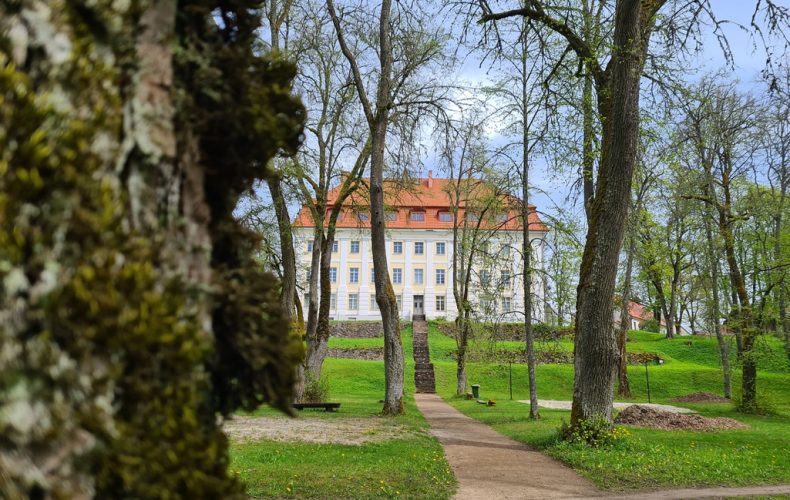
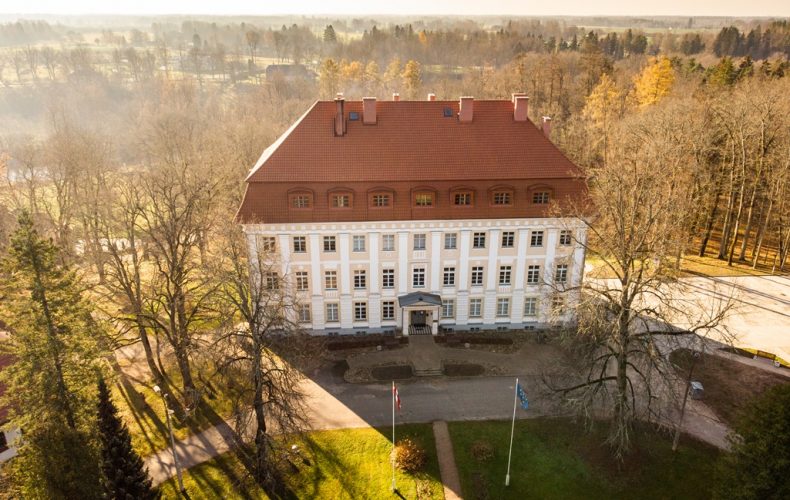
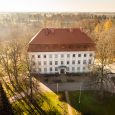

The Mazsalaca Museum is located in the old Valtenbergi Manor House.
Walk through the park and feel the charming atmosphere of the manor – next to the manor house there are two regular Baroque gardens, created in different times, which then seamlessly pass into the 19th century.
Valtenbergi Manor is a noble example of Late Classicism on the banks of the river Salaca. The manor buildings were built in the period from the 18th century. The 18th century was the second half of the 19th century. The buildings were built in the 18th century and the first half of the 19th century.
At the centre of the ensemble is the manor house, built in 1780 on the initiative of the manor owner Wilhelm Georg von Falkerzam.
MUSEUM EXHIBITIONS
Sandstone exhibition
Since 2017, the manor house has been the centrepiece of the ensemble.
AncientFamily Trees
In 2009, the family trees were donated to the museum by Nellija Nurmika, head of the North Vidzeme Office of the Latvian Cultural Foundation. The creator of the family trees is family tree researcher Jānis Plūksne, and the author of the idea is Nellija Nurmika.
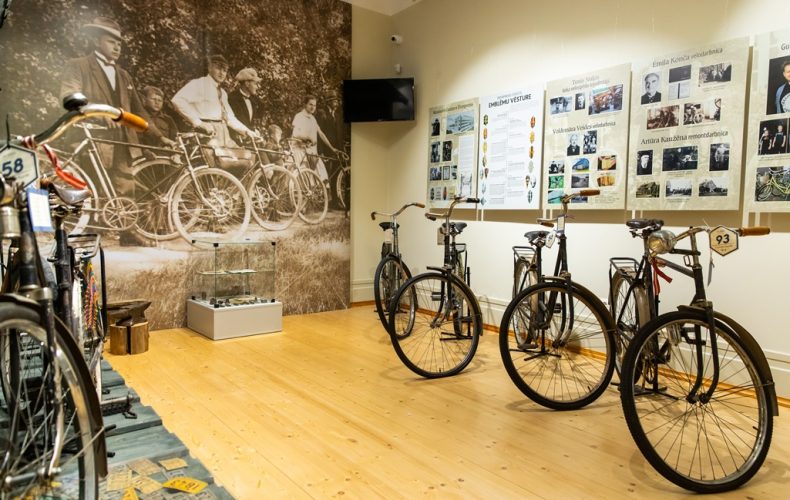
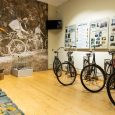
The exhibition features around 40 family trees. There is a famous Art Nouveau architect Konstantīns Pēkšēns, as well as the first Latvian playwright Marija Pēkšēna. There is also the family of Pēteris Hincenbergs, whose men’s choir won a silver lyre at the first General Song Festival. Also Adams Ore – the first academically educated Latvian organist. The family of Nikolais Daugulis – the head of the town of Mazsalaca during the First Free State of Latvia. The family of Gustavs Ērenpreiss, the founder of the bicycle factory, the family of artist Pēteris Kundziņš, the family of poet Edvarts Tūters, the family of wood sculptor Valters Hirte and others.
The bell collection
The bell
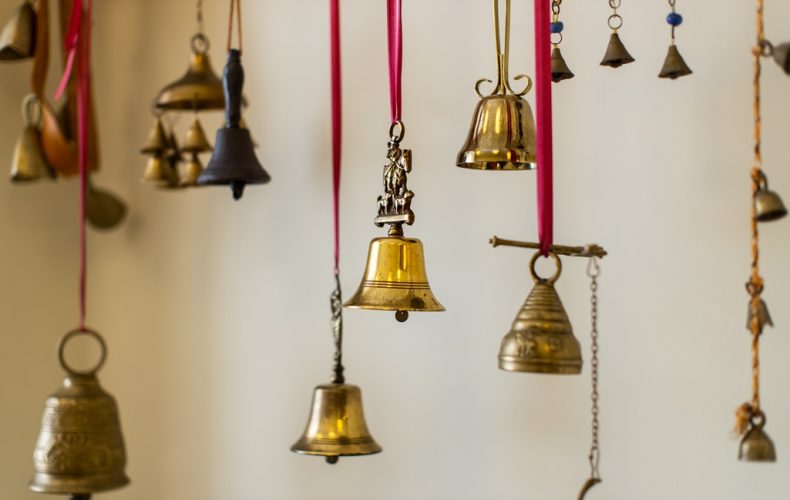
collection was donated to the museum by Ēriks Celmiņš. He was born in Citroni, Kūki village, Krustpils district, and currently lives in Mazsalaca. In 2001 Ēriks went to work in Israel and started buying bells of different sizes on the market. A year later he went to work in England, where he continued to add to his bell collection. Relatives, friends and acquaintances also brought bells from other countries.
Over the years, 506 bells were collected. Here you can see a variety of metal, glass, crystal and porcelain bells. In addition to bells, there are a few other items in this collection: pans for roasting coffee beans, cups for warming drinks, scales, metal vases, an iron, bellows.
2015In November, Ēriks Celmiņš decided to donate his collection to the museum.
V.Hirte wooden sculpture collection
Mazsalatsians and guests of the town can get acquainted with a very peculiar and interesting exposition in the museum – sculptures by the woodcarver Valters Hirte and records of the history of their creation.
Hunting trophies
The collection was donated to the museum by local resident and hunter Arnis Šteinbergs.
The collection shows a small part of the beasts and birds that live in the surrounding forests. This collection is not limited to hunted animals and birds, some have been found dead on the roads, in the forest, in the lake. People have found them and reminded Arnis of them. After the hunting trophies are collected, they are processed, cleaned up and neatly presented. In 2013, Arnis Šteinbergs donated his collection of hunting trophies to the museum.
The question – why did he decide to donate his trophies to the museum? – “To make young people and my contemporaries aware of the great nature we still have in Latvia, to create an interest in Latvian nature in young people, to tell them that there are men and women in Latvia who love nature and are called hunters, that there are traditions in Latvia and that they are maintained and improved – that is why I am donating my collection! To remind! To create interest!’
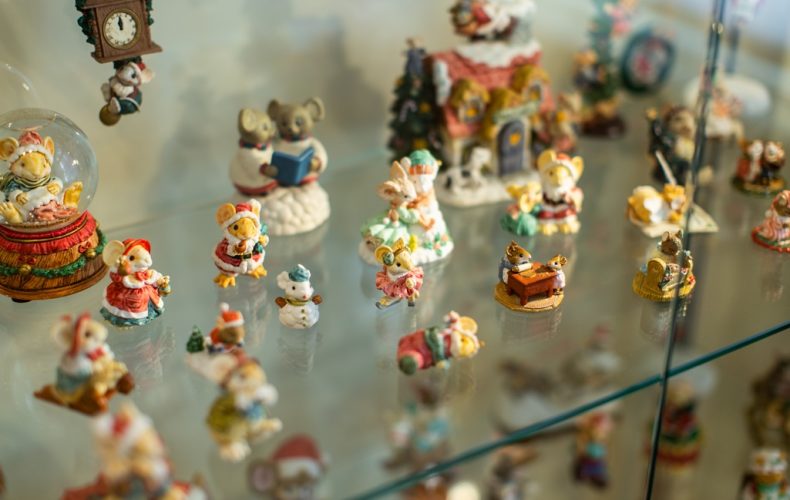
Collection of toy-souvenir mice
A gift to the Museum from Ilga Andersons, a Latvian living in Hamilton, Canada. Ilga was born in Mazsalaca and attended Mazsalaca Secondary School. Because of the war, her family fled to Germany, where Ilga met her husband Leons. Later, Ilga and Leon moved to Canada. There, in 1953, their daughter Valda was born.
In 1957, when Valda was 4 years old, her grandmother gave her 2 mice. This was the beginning of the mouse collection. Since then, relatives and friends everywhere have searched for, bought and given Valda various souvenir mice from all over the world. Gradually, the collection grew so large that it took up two rooms in the basement of the house.
2010In 2010, the collection already contained 1300 mouse figurines, which Ilga Andersons decided to donate to the Mazsalaca Regional Museum.
PRICES
Entrance fee:
- Adults – EUR 2.00/visit one exhibition, EUR 5.00/visit all exhibitions
- Students – EUR 1.00/visit one exhibition, EUR 2.00/visit
- all exhibitions
- .50/visit of all expositions
Guideservice
- For a group of up to 25 people – EUR 21.00
- For a group of up to 26 people – EUR 26.00
- Free of charge – children under school age, persons with disabilities, boarding school residents, residents declared in Mazsalaca Municipality.
Valmiera Municipality Tourist Board photo archive