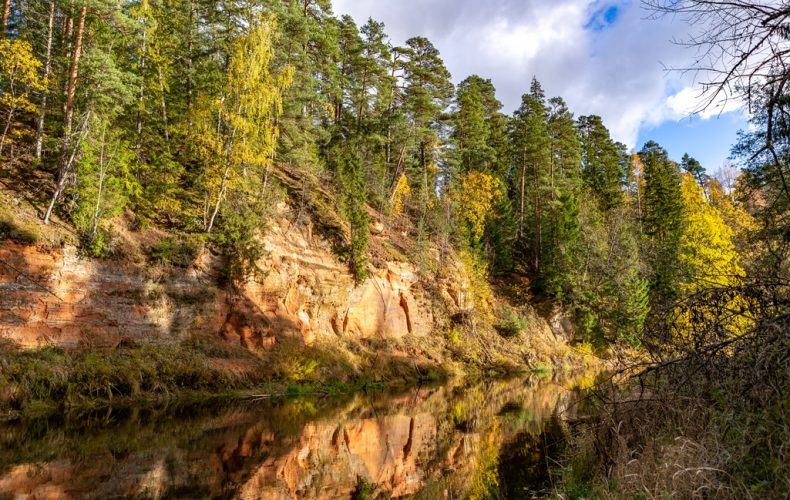
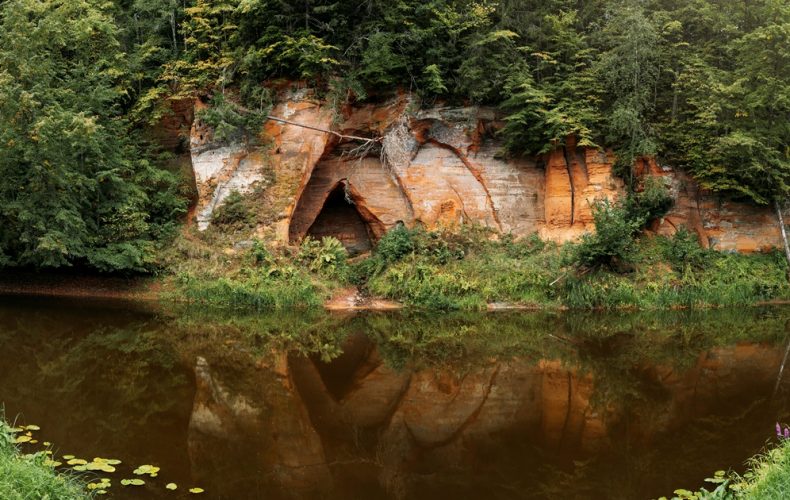
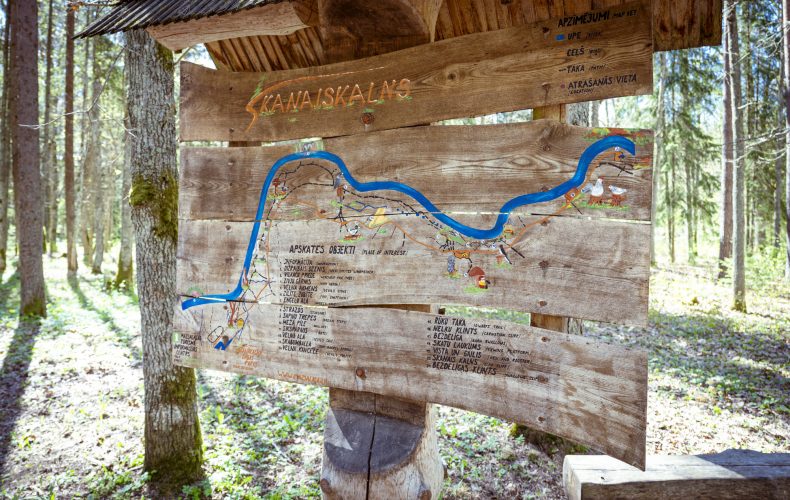
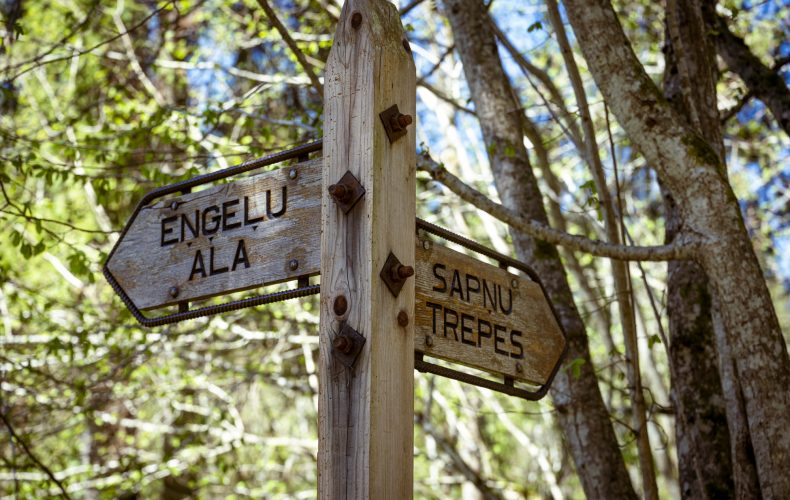
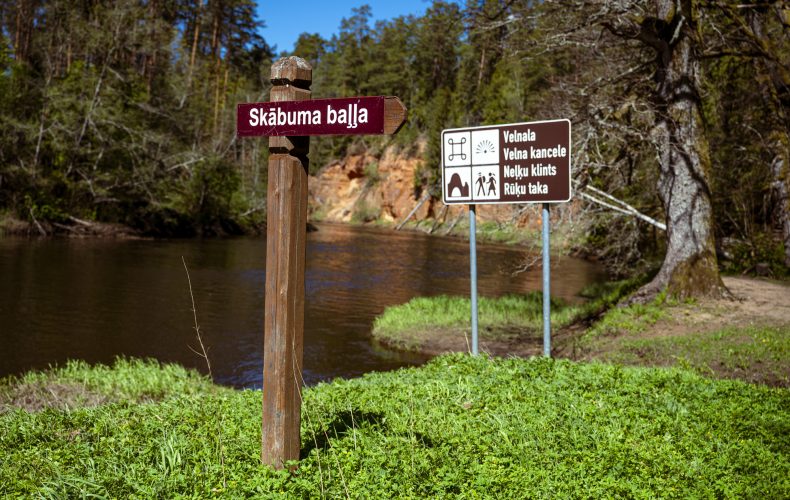
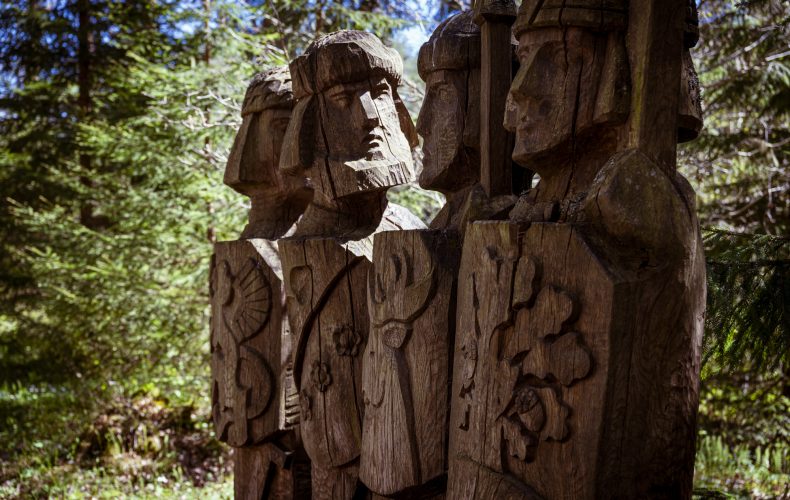

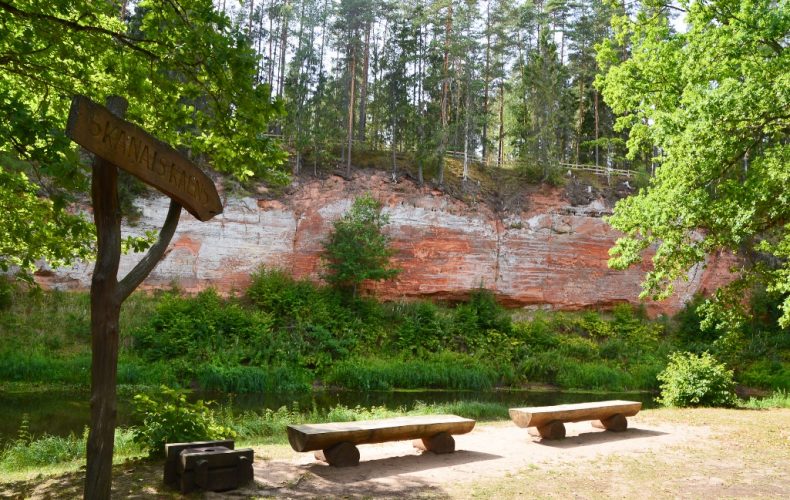
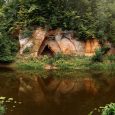
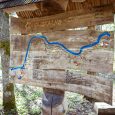
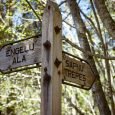
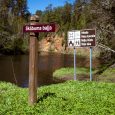

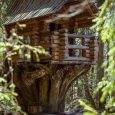
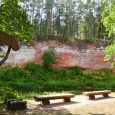
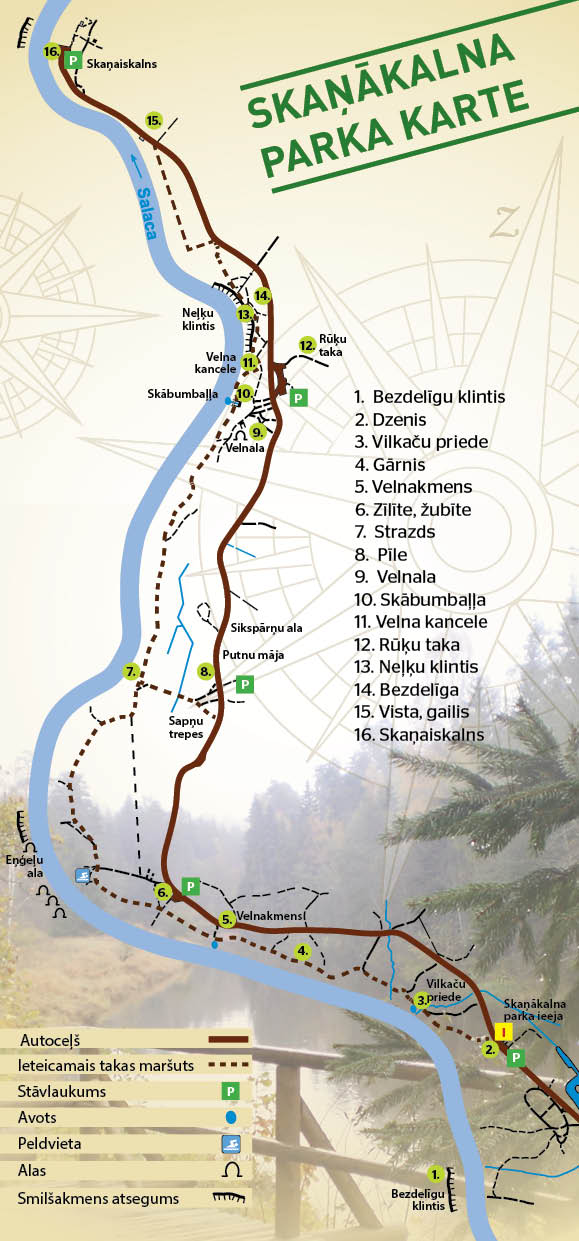
Skaņākalna Nature Park has a 3 km long trail covering the most magnificent part of the Salaca valley with sandstone outcrops, caves, springs and pine forest. Along the trail, you can observe unusual natural formations such as the Vilkači pine, the Velnakmeni, the Angel’s Cave, the Dream Ladder, the Devil’s Cave, the Sour Ball, the Dwarf Trail, the Neļķu cliffs, the Devil’s Pulpit and Skaņokalns.
The Neļķu cliffs are one of the most picturesque red sandstone formations in Latvia, 20 m high and 300 m long, stretching along the right bank of the Salaca River. The Devil’s Pulpit offers a particularly beautiful view of the cliffs. In the 1960s, they were uprooted and considered extinct. The Dwarf Trail, on the other hand, conveys the idea of industriousness and wisdom, symbolised by the hard-working oak dwarves and the owl in the Dwarf Oak, while the Werewolf Pine is unusual for its twisting exposed roots, which are linked to stories about people turning into werewolves.
The Angel Cave is no less splendid, having got its name from the rock arches, resembling angel’s wings. The most recognisable object in the park is the 20 m high Skaņākalna rock (Skaņaiskalns) on the left bank of the Salaca River, which gives the strongest echo in Latvia, with the audience standing by the Salaca opposite the rock and the speaker in certain places in the middle or at the back of the square.
The resting place at the Skaņākalna cliff is also ideal for boaters.
The trail is circular and takes about 2 hours to complete.
Guided tours are available for an additional fee by prior arrangement.
Valmiera Municipality Tourist Board photo archive