ABOUT THE MUSEUM
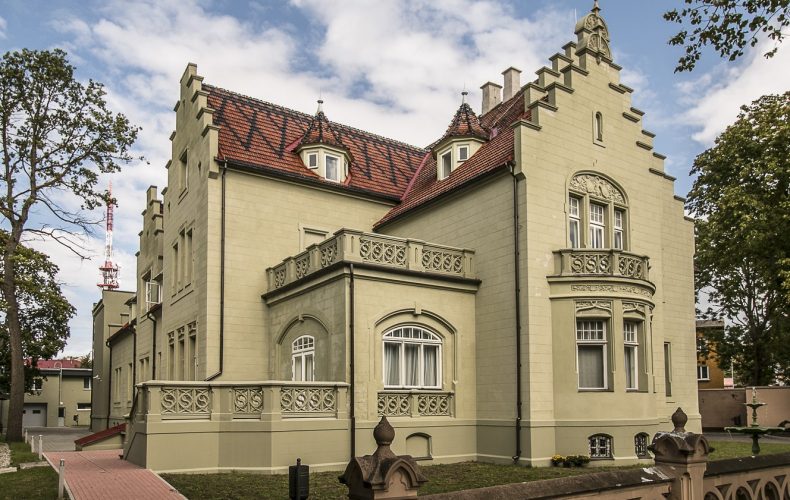
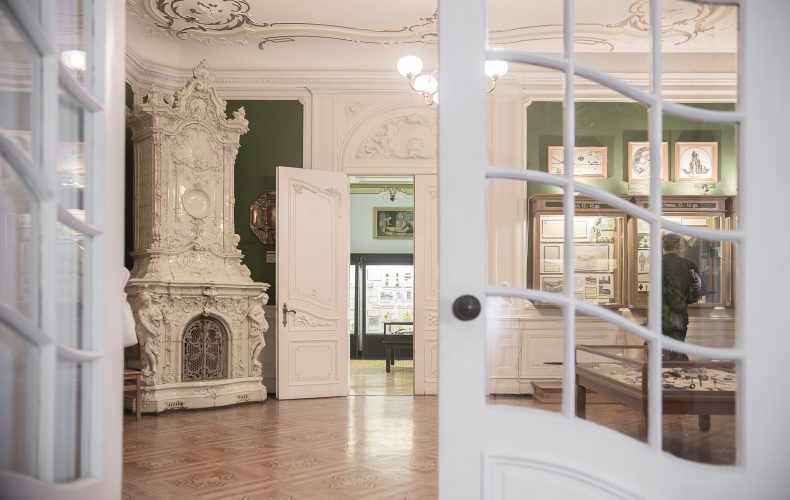
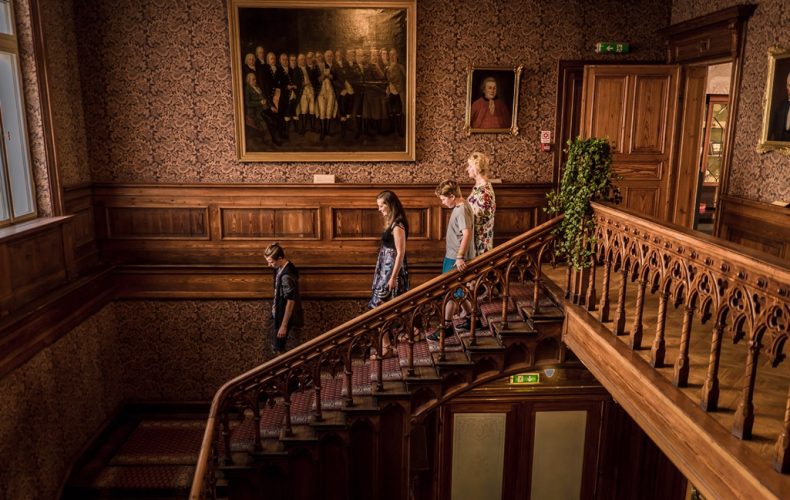
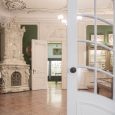
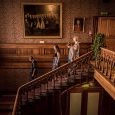
The mansion was built between 1900 and 1901 by Paul Max Berci from sketches by the Berlin architect Ernst von Ine as a residence for the Katzenelson family. Since 1935 the building has housed the Liepāja City Museum. The museum building is an outstanding example of Liepāja’s eclectic architecture of the early 20th century. Together with the outbuilding (the ground floor housed a coach house, the second floor – living rooms for servants), it forms one of the most interesting villa complexes on Kūrmāja Avenue. The spatial structure of the two-storey building, which has a complex configuration, is based on a wide hall with a gallery, from which the other rooms can be reached. The hall is distinguished by a particularly ornate carved interior, the gallery railings are in the form of a pointed-arch neo-Gothic arcade, the portals are decorated with cantilevered sandriks. The interiors are in German Renaissance, Baroque and Rococo styles. The façade of the house is in late Gothic style, in stucco.
The Liepāja Museum is included in the list of state protected cultural monuments and is located in the territory of and is a part of the state monument of urban planning “Liepāja City Historical Centre”. Liepāja Museum is an important preserver and promoter of national cultural heritage.
LIEPAJAMUSEUM EXHIBITIONS
- Ancient history of Liepāja region.
- Liepaja in the Middle Ages.
- Liepaja in the 19th century.
- Life and work of Miķelis Pankoks (1894-1983).
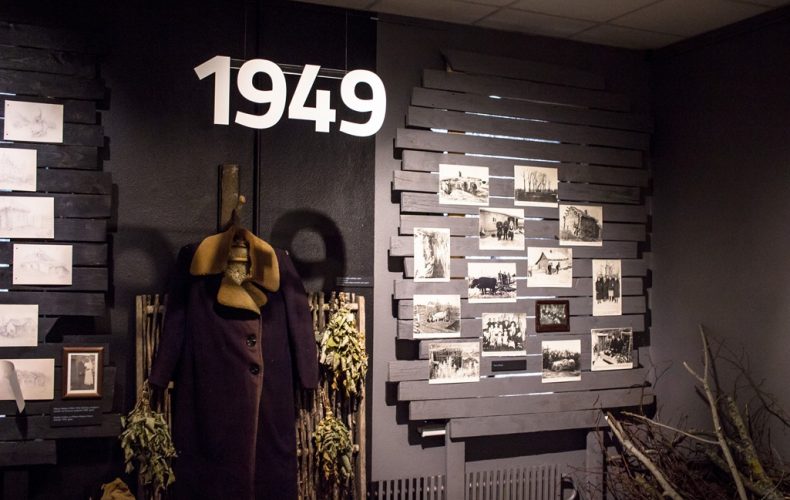
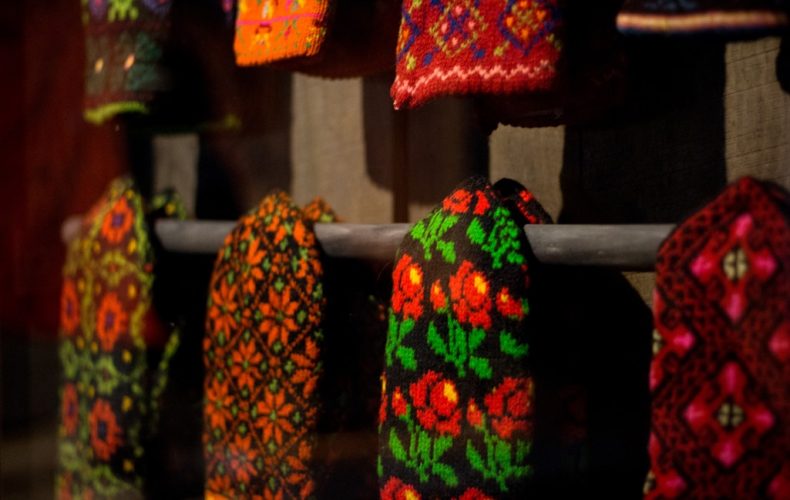
- People, life and work of South Kurzeme.
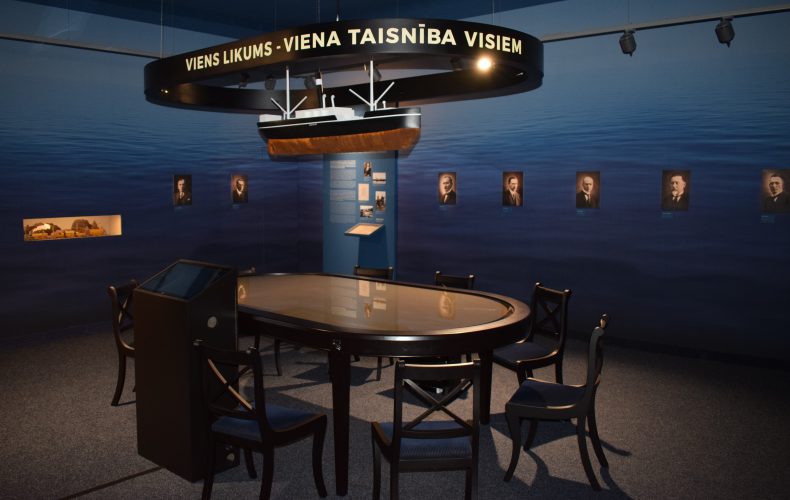
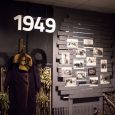
- Six months of the Latvian Provisional Government in Liepāja.
PRICES
VISIT TO THE MUSEUM SURROUNDINGS – FREE OF CHARGE.
GUIDESERVICES FOR GROUP AND INDIVIDUAL TOURS
- Excursion and workshop visit gb.
- EUR 3,00 – 25,00
- Guide service in Latvian per hour – EUR 20,00
- Guide service in a foreign language per hour – EUR 25,00
- Guided tour of the museum’s open collection in Latvian per hour – EUR 30,00
- Excursion in the museum’s open collection in a foreign language per hour – EUR 35,00
MUSEUMPEDAGOGY CLASSES
- Museum pedagogy class in the museum premises in Latvian gb.
- EUR 2,00
- Museum pedagogy lesson in the museum premises in a foreign language gb. EUR 2,50
OFFERS
EDUCATIONAL PROGRAMMES AT THE MUSEUM
Liepaja Museum currently offers museum pedagogy classes at Liepaja Museum, Kūrmājas prospekt 16/18 and Liepaja Museum, 17th-19th centuries.
We offer classes both in person and online via the online platform “Zoom”.
The Liepaja Museum’s educational programme offer consists of permanent classes, which are available throughout the year, as well as seasonal classes and classes developed for specific art exhibitions. To find out about current exhibitions and seasonal museum education programmes, as well as to apply, please contact the Liepāja Museum’s Chief Museum Educator Inga Zīvertis – by phone +371 29605223, +371 63422604 or by e-mail: inga.ziverte@liepaja.lv.
The Liepāja Museum’s permanent educational programmes are available online:
Onlinelesson “Seasonal Customs in the South Kurzeme Farmstead ”
The lesson provides an opportunity to look at the topic of cultural heritage in a modern way. The lesson has two parts. First, through an interactive narrative, students learn about Latvian seasonal customs and related traditions, as well as the works and tools related to the specific seasonal customs, which can be seen in the Liepāja Museum exhibition. The second part of the lesson is for pupils to carry out independent creative work, using the knowledge acquired in the theoretical presentation and individual interpretation.
The theoretical presentation is designed to be related to the values included in the Latvian Cultural Canon.
The lesson encourages pupils and teachers to think about the following questions: how and why have some annual customs disappeared, while others have become established and survived to this day? What has been the interaction between Christianity and Latvian customs? How has the way of life of the inhabitants of the Latvian territory changed and how can this be inferred through the customs of the seasons? What aspects of lifestyle, nature, work or other influenced the emergence of customs? Do my feelings about the deep roots and richness of Latvian folk traditions create joy and pride in belonging to my country?
The museum pedagogy lesson is based on the objects of the exposition “South Kurzeme Farm People, Life and Work”. The exhibition was opened on the 90th anniversary of the Liepaja Museum and its scenography and design was created by artist Christian Brekte.
Duration 40-60 min. Target audience.
Onlinelesson “Art Around Me”
The lesson provides an opportunity to learn and get acquainted with the basic themes and principles of visual art genres, techniques and movements in relation to the artworks and artists represented in the Liepāja Museum’s collection, which are otherwise not publicly accessible to museum visitors, thus getting to know and perhaps even encounter for the first time a part of the cultural heritage of Liepāja artists.
First of all, in the form of an interactive narrative and mutual discussions, the students, under the guidance of the museum educator, get acquainted with the basic principles of visual art – types of genres, techniques, methods of representation, observing and recognising the specific forms of expression in the painting materials of the Liepāja Museum collection.
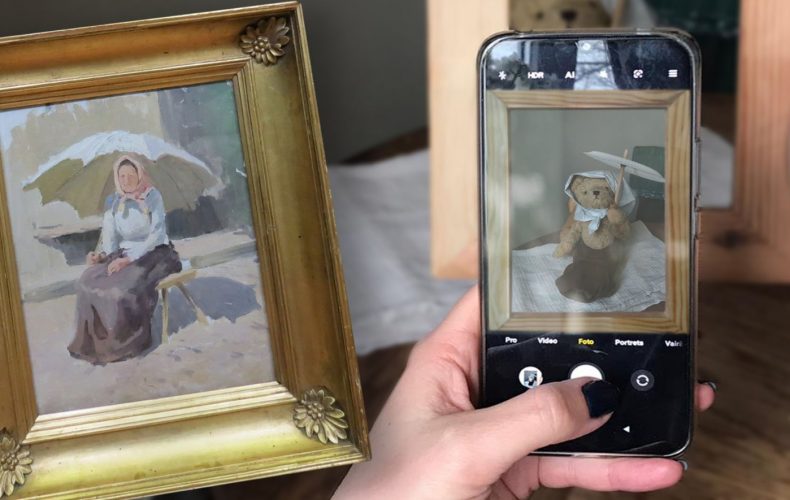
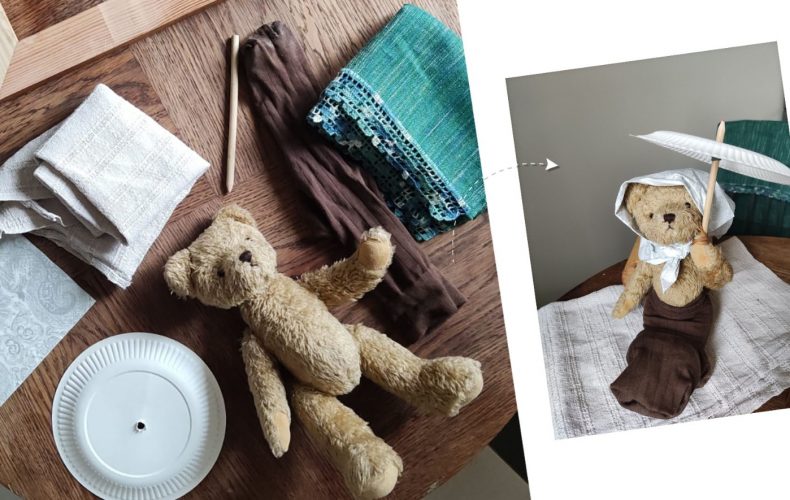
Next, the students carry out independent creative work, taking into account the knowledge acquired in the theoretical presentation and creatively expressing themselves, creating a spatial representation of a painting from everyday objects around them, using as an example one of the works of artists offered in the Liepaja Museum collection. The lesson ends with a virtual presentation of the newly created installations to the classmates and joint guessing which of the works offered in the assignment is spatially reproduced.
The theoretical outline is designed to be connected with the values included in the Latvian Cultural Canon. Using the possibilities offered by technology, students can actively participate in the lesson process by virtually answering questions, engaging in discussion and analysis of the artworks they see.
The lesson encourages students and teachers to think about the following questions. Where in my neighbourhood can I get inspiration and see the potential for creating artworks? What criteria are used to distinguish between genres, techniques and types of art?
40-60 min.
Onlinelesson “My Family Museum”
During the lesson “My Family Museum” created at the Liepāja Museum Learning Centre, students are introduced to the Liepāja Museum and its collections, the specifics of the museum, the types of museums, their basic principles of operation, what are the main tasks performed by the museum as an institution, what specialisations and professions people work in the museum.
The aim of the lesson is to raise students’ awareness of the work and functions of museums and the use of museum collections for research, as well as to learn about the importance of preserving and making good use of the cultural heritage of their own nation.
Through the lesson, students are encouraged to become aware of the value of their family heirlooms and personal belongings. It is possible to explore how to look at the things around us through the prism of museology. Students will find out at what point an object in their possession can become an object of interest for the museum’s collection.
The lesson has two parts. First, through interactive narration and discussion, students will learn about the basic principles of museums, get to know the types of museums and understand how museum collections are formed.
In the final part of the lesson, students will carry out independent creative work, following the knowledge acquired in the theoretical presentation. They are invited to choose an object of value or symbolism in their family or environment to look at and to try to describe it according to the basic principles of valuing objects in collections.
Duration 40-60 min.
Liepaja Museum’s educational programmes are permanently available in Liepaja Museum, Kūrmājas prospekts 16/18:
South Courland Homestead – the lesson improves students’ understanding of the structure of a Latvian homestead in the late 19th century early 20th century, the rhythm and development of everyday life in relation to this living space.
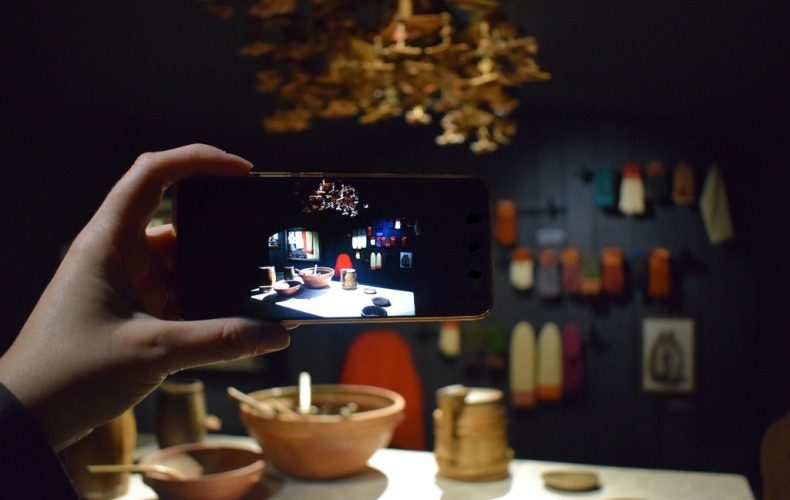
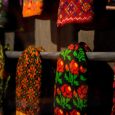
The lesson takes place in the Liepaja Museum exposition “People, Life and Work of South Kurzeme”, where pupils have the opportunity to see old tools, household items, jewellery, ceramics and clothing.
During the lesson pupils are introduced to the South Kurzeme farmstead, the buildings belonging to it, their function. To consolidate the acquired knowledge, group work takes place in the exhibition “People, life and work of South Kurzeme” and the presentation of each group’s room.
Duration 40-60 min.
Visualart lesson in the museum – the aim of the lesson is to acquaint students with the Liepaja Museum’s exhibition offer and to help them learn the content of the visual art lesson in the museum.
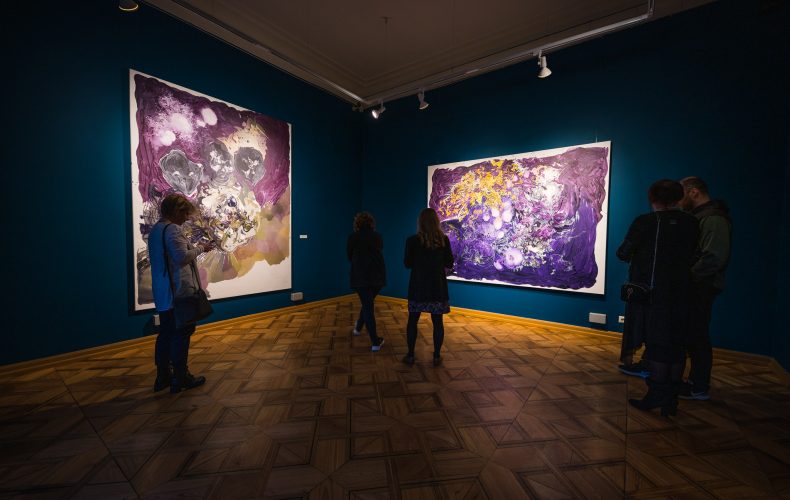
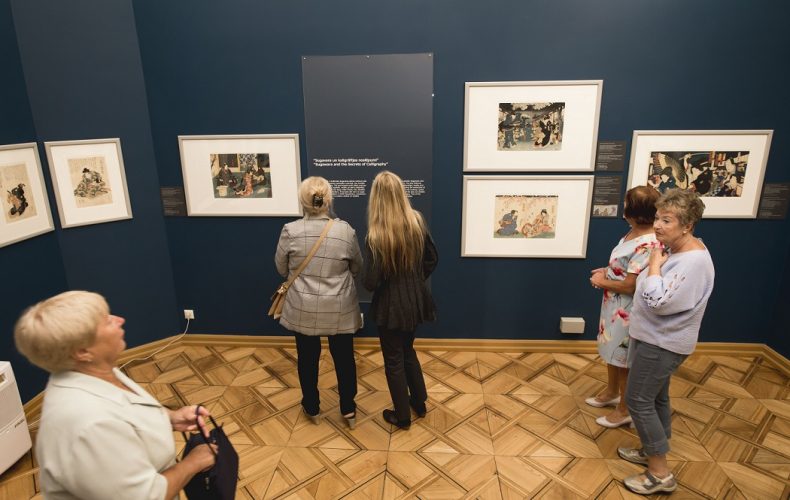
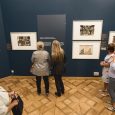
During the Museum Pedagogy, students will get acquainted with the Liepaja Museum’s current art exhibitions, the artists and works represented in them.
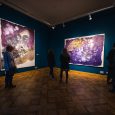
The main building of the Museum, Kūrmājas prospekts 16/18, has three exhibition halls, where more than 20 exhibitions are held during the year.
The Liepaja Museum has prepared a museum pedagogy lesson that can be adapted to the wide range of exhibitions.
The lesson lasts 40-60 min. The lesson is included in the “Latvian School Bag” programme.
Lesson “What is a Museum?” – The lesson is suitable for pupils from 1st to 9th grades, especially 5th graders, learning the topic “How are historical evidence researched and preserved?”
The Museum Pedagogy lesson has two parts and the first part takes place in the main exhibition hall of the Museum, while in the second part of the lesson pupils have the opportunity to visit several rooms of the Liepāja Museum collection, where authentic objects from Liepāja and Liepāja surroundings from the 18th-20th centuries are displayed.
The aim of the lesson is to raise students’ awareness of the work of the museum, its functions and the use of its collection for research.
In the first part of the lesson, the museum educator introduces the pupils to the basic principles of museum activities, types of museums in Latvia, the specifics of the Liepāja Museum, the principles of the museum collection, the building and history of the Liepāja Museum.
Duration of the lesson 40-60 min.
The Liepaja Museum also operates the Kurzeme Folk Costume and Information Centre (KTIC)
The KTIC preserves folk costumes, teaches ancient skills and applies them in the production of folk costumes. The Centre organises educational seminars in Liepāja and the region, as well as individual consultations, lifelong learning programmes for adults and museum pedagogy classes, using professional lecturers, consultants and craftsmen. Registration for consultations with Vineta Solovjova, Head of the Kurzeme National Costume Information Centre, +371 294 49771.
Liepāja 17th-19th century.
Lesson “Enter the chambers of the guest house owner Margrėta Hoijere!” – The Liepaja Museum has opened the doors to a new branch of the museum called Liepaja 17th-19th centuries. The new branch of the Museum of Interiors “Guest House of Mrs Hoijeres”, invites both students and teachers to experience the sense of historical presence and the special atmosphere of this cultural heritage object of Liepāja, which is also a national architectural monument.
The aim of the lesson is to introduce students to the 17th-18th century interior, focusing on the pot stoves, mantelpiece and wall paintings, as well as to create awareness of the diversity of Latvia’s cultural heritage. The exhibition gives pupils the opportunity to imagine how people lived in this period and what were the most necessary household and interior items of the time. The lesson also gives pupils the opportunity to learn historical facts and stories about the history of the ancient building and its restoration process, as well as about the people who lived in the building and visited the guest house.
The history of the Liepaja Interior Museum “Mrs Hoyer’s Guest House” is linked to David Hoyer, an immigrant from Holland, who in 1677 married Margrethe Holst (née Hoyer), after whom the new interior museum is named. It is believed that the guesthouse was one of the economic activities of the Hoyer family in the rapidly growing town at the end of the 17th century, and that Margrethe Hoyer became its owner after her husband’s death.
Duration 40-60 min. The lesson is included in the Latvian School Bag programme.
Photos from the Liepāja Museum archive.