Stories of the robber David, who lit false fires to lure ships into danger, give the location of the lighthouse a mysterious and thus special appeal.
As late as the 19th century, the lighthouse was still in use. At the beginning of the 19th century, huge trees grew here and served as a landmark for sailors. On nautical charts, the site is known as Domkalna, i.e. Church Hill (a reference to an ancient shrine). Before the Slītere Tower was built, a giant oak tree grew on the bluff of the Blue Mountains and was marked on sea charts. When the oak was struck by lightning, it died.
For several centuries, the Slītere Church, built by Danish Vikings, served as a landmark.
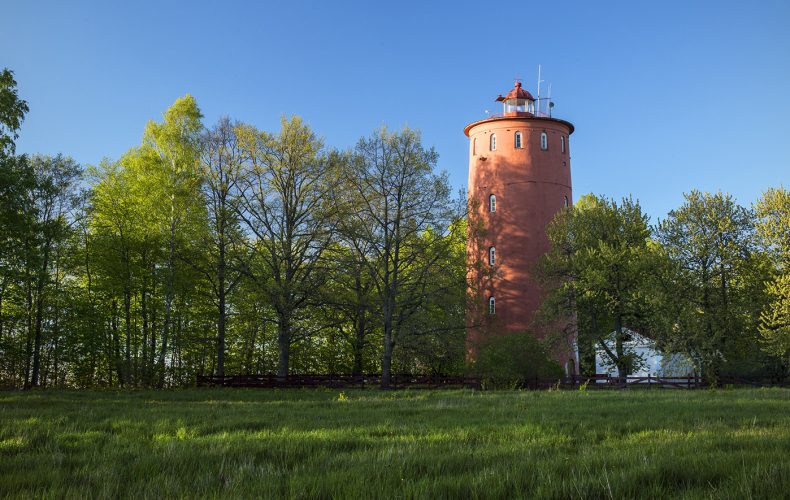
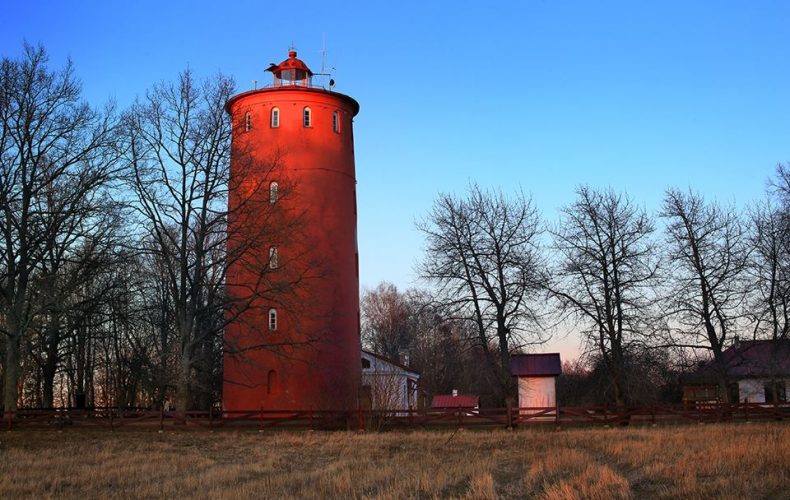
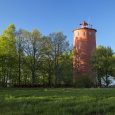
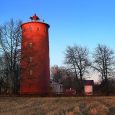
1849Slītere Tower, built of boulders in 1818, became a lighthouse only in 1961 and is today considered the second oldest surviving navigation structure in Latvia (after Ovīši Lighthouse).
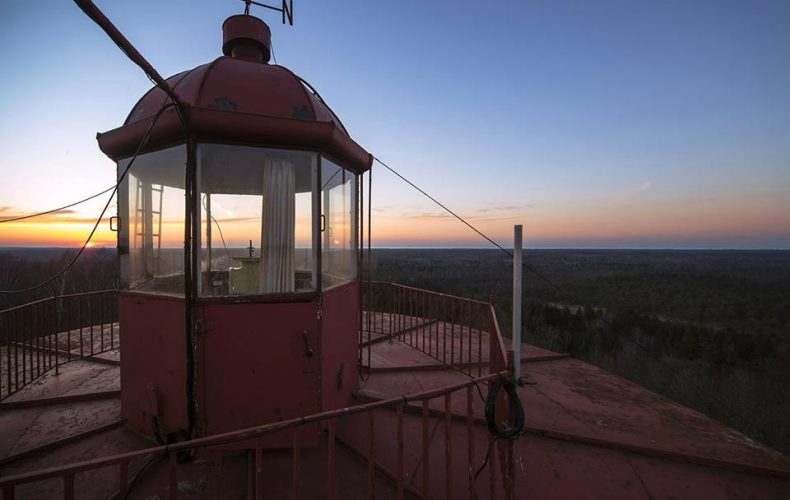
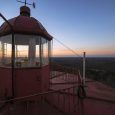
It was one of the highest lighthouses on the entire Baltic coast (more than 100 m above sea level). The climb is quite impressive, as the 26-metre-high tower is topped by the Blue Mountains, which reach 76 metres above sea level at the base of the building. From the heights of the lighthouse you can see the lighthouses of Mikeltornis, Ovīši, Kolka and even Cape Sirve in Sāmsala (to the left of the Mazirbe church). The slender tower of Mazirbe Church is just beyond the forest thicket of Undžava, and is a good landmark for fishermen and sailors. The Blue Mountains escarpment has another peculiarity: none of the Latvian lighthouses is so far from the sea (5.3 km).
In 1999, the lights in the Šlītere lighthouse were extinguished and the lighting equipment was removed. The lighthouse’s removal does not endanger the safety of navigation on the North Kurzeme coast, as ships are now equipped with modern navigation equipment, so the number of light landmarks can be reduced. The former lighthouses still remain as good daytime landmarks for fishermen.
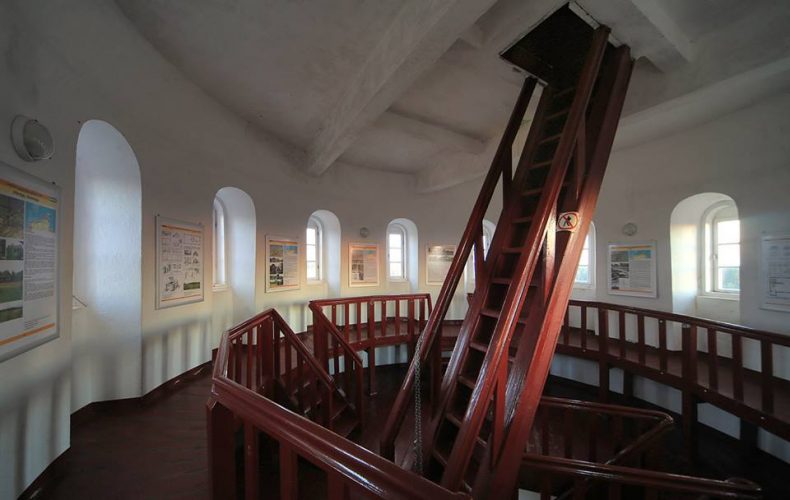
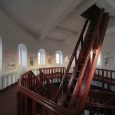
Since 2002, the lighthouse complex has been a tourist attraction of Slītere National Park, serving as an observation tower for visitors.
Photos from the Talsi TIC archive.