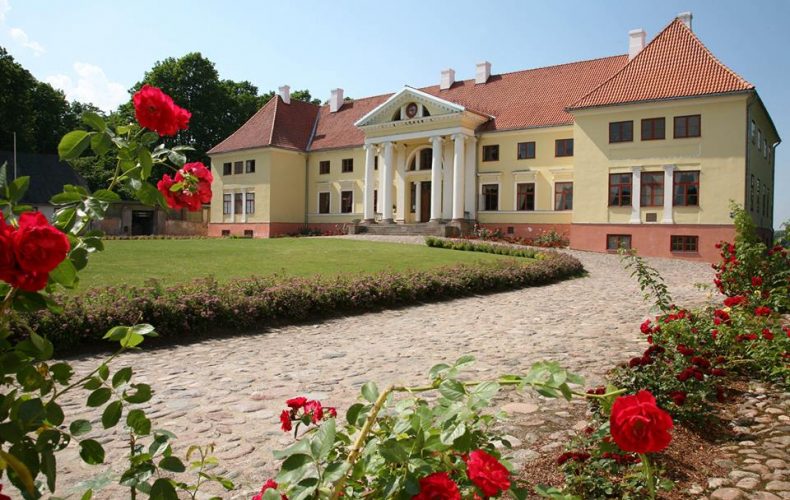
Durbe Castle is the only one of Latvia’s historic manor houses where the historic interior from the late 19th and early 20th centuries has been fully reconstructed, offering a glimpse into German-Baltic culture. It is considered one of the architectural gems of Courland Classicism, featuring a landscape park and a rotunda with the longest pedestrian bridge in Latvia.
🏰 About the castle
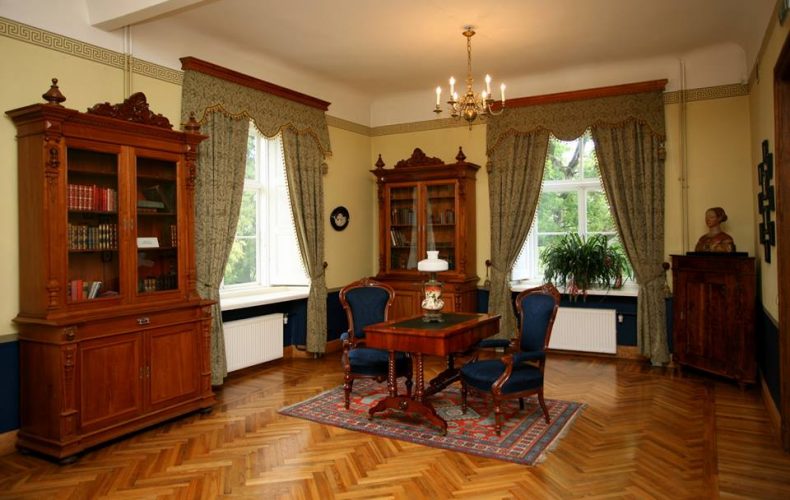
The historic interiors on the first floor have been restored—the study, the library, the great hall, the round hall, the gentlemen’s parlor, the ladies’ boudoir, the bedroom, the children’s room, the dressing room, and the bathroom. The works of art not only provide insight into the culture of Latvian manors but also offer a glimpse into significant trends in European art.
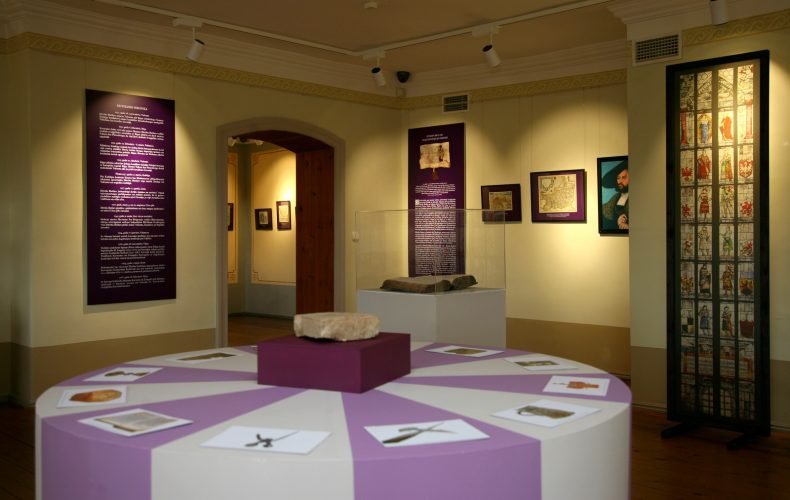
The second floor features cultural-historical research exhibitions on current and under-researched topics in history and art history, which highlight the significance of manors in Latvia’s contemporary cultural landscape and their historical traditions.
Durbe Castle is a member of the Association of Castles and Museums of the Baltic Sea Region.
🖼️ Exhibitions
EXHIBITION: The Baltic Sea
📅 Through March 23, 2027
The exhibition features items from the collection of the Postcolonial Museum (in the Netherlands), which reveal the importance of seafaring and tell the stories of ships and people whose lives and fates are linked to the Baltic Sea region.
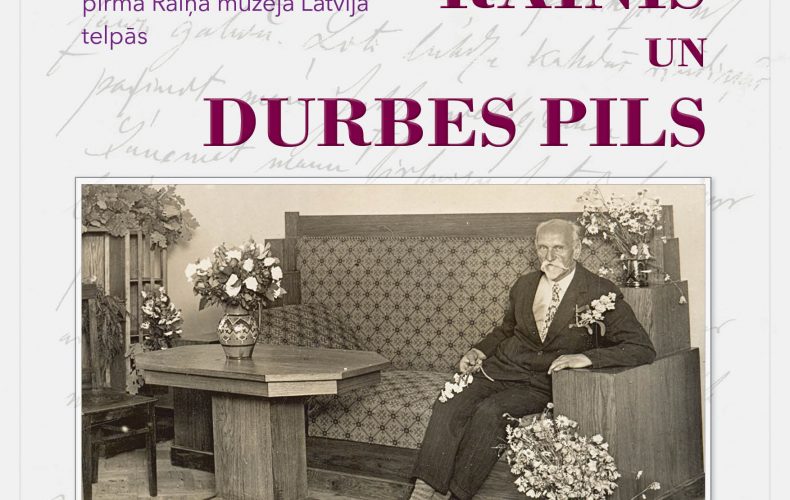
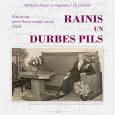
Rainis and Durbe Castle
The exhibition is located in the room where the Rainis Museum was housed for eight years (1929–1937); the poet himself helped create the museum.
The exhibition “Rainis and Durbe Castle” was created not only to reveal the connection between this outstanding poet and Durbe Castle and to provide insight into the creation and layout of the Rainis Museum, but also to encourage visitors to gain at least a little deeper understanding of that era and this remarkable figure. At the same time, it offers a glimpse into the history of Durbe and other manors, the fates of their owners in the first half of the 20th century, and into the lives of the last owners of Durbe Manor—the von der Recke family.
🎓 Educational Programs
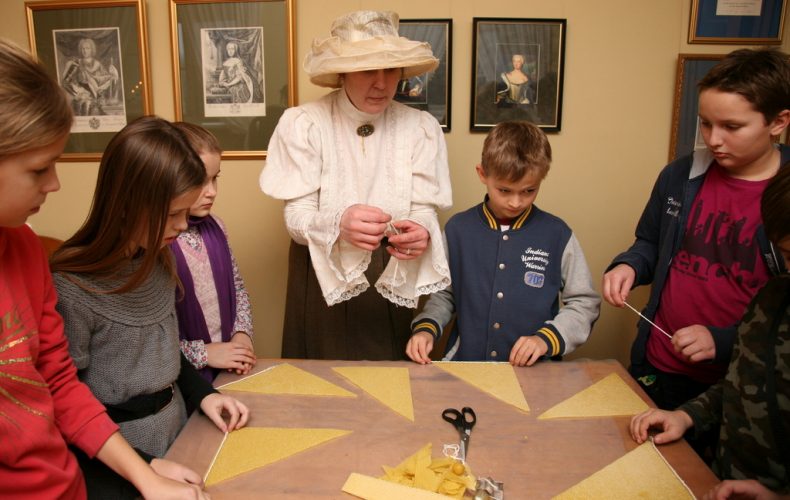
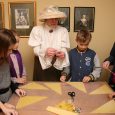
Using the example of the Tukums Durbe Castle military hospital, for pupils, the complex historical situation in Latvia in 1919 is revealed through personal experience and participation in role-playing.
During the lesson, for pupils, the most important events of the War of Independence are reviewed, historical sources are examined, and the short film “Lizī’s Story: 1919” is watched.
The lesson is designed for groups of pupils in grades 5–12. It is available in the “Latvian School Bag.”
Durbe Castle once belonged to the poet Rainis, so the goal of this lesson is to spark interest in the outstanding poet Rainis for pupils (1865–1929) and his literary work, as well as his contribution to Latvian culture, including the modernization of the Latvian language.
The lesson consists of three parts: an introduction to the exhibition, a discussion about Rainis’s personality and his contribution to the development of the Latvian language, as well as a practical session dedicated to developing reading and writing skills through Rainis’s texts.
The lesson is designed for groups of pupils in grades 4–12.
The orienteering game takes place at Durbe Castle and in its park, located on the Slocene Riverbank. For pupils, the 19th-century castle’s interior, works of art, various historical and original artifacts, and how they were used in the past compared to today are explored.
The park features 19th-century landscape elements, small architectural forms, and a variety of trees and plants, while the castle courtyard showcases the Classicist architecture of the manor buildings.
The lesson is designed for groups of pupils in grades 1–9. It is part of the “Latvian School Bag” program.
The lesson is based on Wilhelm von der Recke’s written account of his mother’s memories of the Christmas season at the Zante Manor. In the late 19th and early 20th centuries, the patriarchal tradition of manor owners and servants celebrating holidays together still existed, including Christmas, which brought together the manor owners, their family members, friends, manor servants, and the estate’s residents.
The lesson is designed for groups of pupils in grades 1–6. It is part of the “Latvian School Bag” program.
🎟️ Prices
Admission Fee
- Forpupils – 3.00 EUR
- Adults – 5.00 EUR
- Preschool-aged children and chaperones accompanying groups of pupils (up to two) – free
Museum Tours
Guided tour for up to 20 people (1 hour):
- In Latvian – 20.00 EUR
- In a foreign language – 22.00 EUR
Themed tour for up to 20 people (1 hour):
- In Latvian – 24.00 EUR