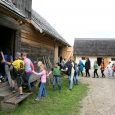
The Pastariņš Museum is located in Dzirciems, Zentenes Parish, Tukums Municipality, on the historic “Bisnieki” farmstead, where the writer Ernests Birznieks-Upītis (1871–1960) was born; who was called Pastariņš as a child. The museum invites children and adults to learn about life on a rural farmstead in Northern Kurzeme, participate in traditional farm work, learn games and pastimes, and to learn about Latvian traditions and the writer’s body of work.
🏡 About the museum
The Pastariņš Museum is dedicated to the writer Ernests Birznieks-Upītis (1871–1960), who was called Pastariņš as a child. The “Bisnieki” farmstead, where the writer was born, is more than 400 years old and has changed beyond recognition over time. The historic buildings have been restored to reflect the mid-20th-century period when the writer’s brother, Kārlis Birznieks (1864–1942), managed the farmstead.
The “Bisnieku” farmstead is a place that the author vividly describes in his trilogy *Pastariņa’s Diary*, as seen through the eyes of a child. The Pastariņa Museum is a museum for children who want to try their hand at farm work, learn traditional games and pastimes, learn about the daily life and traditions of rural homesteads in Northern Kurzeme, walk the Pastariņa Trail, and discover the history of the Birznieki family.
🖼️ Exhibitions
📖 Pastariņš at Home, at School, and in Life
An interactive exhibition dedicated to the life and work of writer Ernests Birznieks-Upīšs (1871–1960), as well as to the history of the Pastariņš Museum. The exhibition is based on the structure of E. Birznieks-Upīš’s most notable collection of short stories: Pastariņš at Home, Pastariņš at School, Pastariņš in Life.
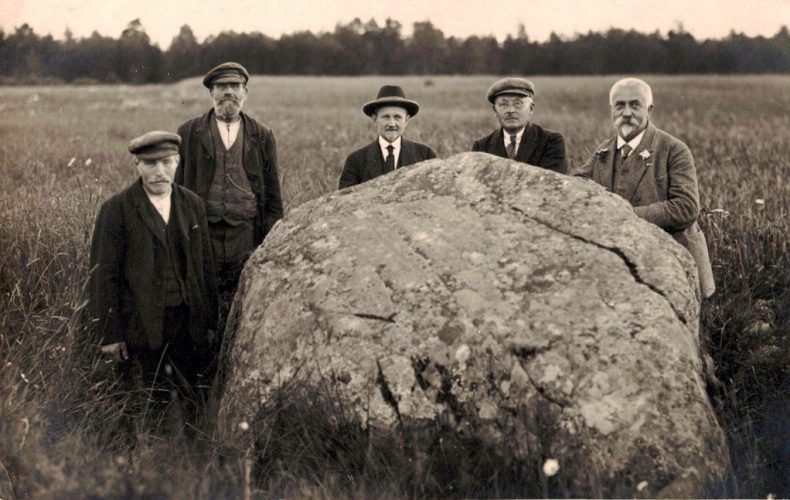
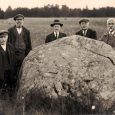
The video projector displays photographs from 1871 through 2017, which provide insight into the writer’s life, his literary contributions, the Birznieks family, and the restoration of the “Bisnieki” farmstead.
In the game “The Adventures of Pastariņš,” visitors can explore the “Bisnieki” farmstead throughout the different seasons and learn about the farm work that took place during the childhood of writer E. Birznieks-Upīšs. Visitors can read excerpts from the author’s most popular works, which reflect the diversity of his creative output and his vivid depictions of rural landscapes and life, as well as sit at a school desk from the early 20th century and learn about the local dialect.
On display are items that once belonged to the writer—a writing desk, an inkwell, a bookcase, and various other everyday items, including the mug from which the writer drank his daily portion of milk.
🌾 The Barn—A Reflection of the Family’s Prosperity
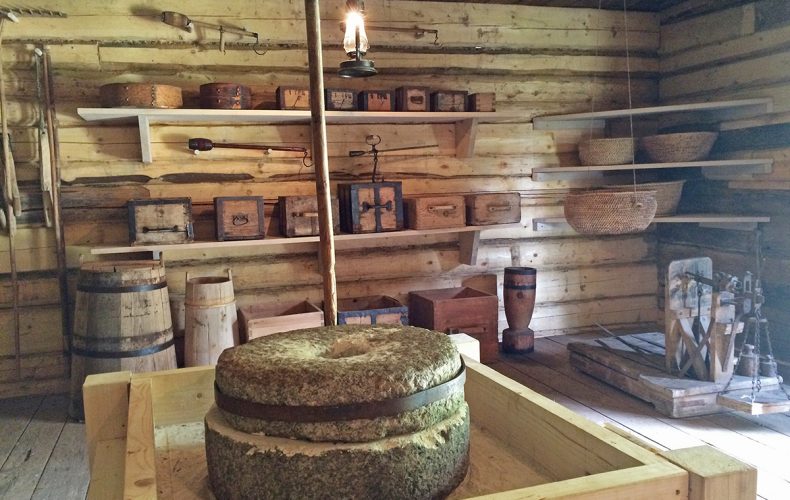
The exhibition set up in the “Bisnieki” barn “The Barn—A Reflection of the Family’s Prosperity” takes visitors into the daily work life of the Birznieks family and allows them to experience the main traditional farming activities on a rural farmstead. Excerpts from Ernests Birznieks-Upīts’s trilogy “Pastariņš’s Diary” resonate with the objects on display, vividly and realistically illustrating the material world that was familiar and understandable to Pastariņš, but which today has become distant and unfamiliar to most children and adults.
The barn houses more than 100 ethnographic artifacts that illustrate the daily life on a North Kurzeme farmstead in the late 19th century and the : the daily activities of women and men, food storage, agricultural implements, traditional tools, and the skills and crafts necessary for life on a farmstead.
🏘️ A Northern Kurzeme Farmstead – Pastariņš’s World
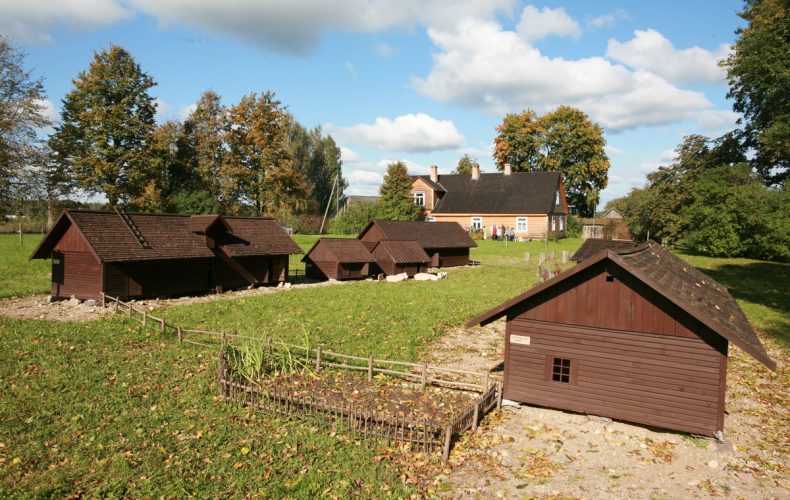
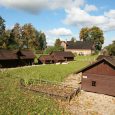
The exhibition introduces visitors to the typical layout of a Northern Kurzeme farmstead and the functions of its buildings in the late 19th and early 20th centuries, when the writer Ernests Birznieks-Upītis—known as “Pastariņš” in his childhood—lived at “Bisnieki.”
Visitors can compare the layouts of the two farmsteads by viewing the existing buildings and a scale model—little houses large enough for “little people” to live in.
🎓 Museum Education Classes
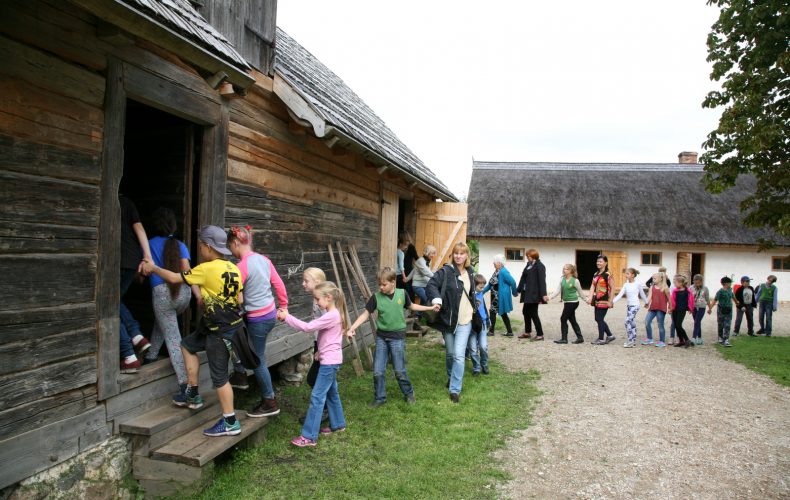
During the “Pastariņš on the Farm” class, for pupils—using the literary stories “Pastariņa’s Diary” and “Nina’s Fairy Tales” by author Ernests Birznieks-Upīšs— learn about the tools and instruments, daily life, and the way things are done on Pastariņš’s farm by actively participating in the events and tasks described in the stories.
For pupils, how to harness and work with horses, learn about the use of dairy products, identify various grains, grind flour, and bake bread, and learn about medicinal plants and herbal teas.
Activities may vary slightly depending on the season.
Age group: Pupils in grades 1–12.
Latvian School Bag: Yes.
The “Solstice School” lesson introduces pupils to the traditions of celebrating seasonal holidays and helps young people develop the skills to talk about their own families’ holiday traditions.
During the lesson, information is provided for pupils about the birthplace of writer Ernests Birznieks-Upītis (1871–1960), “Bisnieki,” and the descriptions of festive celebrations found in his works. Working in groups, tasks related to preparing for and celebrating festivals are performed by pupils, including tidying up and organizing the homestead, making decorations, as well as learning games and singing songs.
By deepening their knowledge of folk traditions and participating in seasonal rituals at the Pastariņa Museum, it is encouraged for pupils to better understand and celebrate the spring, summer, autumn, and winter solstices (depending on the season).
Age group: For pupils in grades 1–12.
Latvian School Bag: Yes.
Participants in the “Bread Baking at the Pastariņa Museum” workshop have the opportunity to learn bread-baking skills at a rural farmstead in Northern Kurzeme and to explore bread-baking traditions at the birthplace of Latvian writer Ernests Birznieks-Upīšs (Pastariņš).
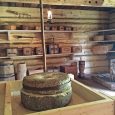
The introduction to the preparatory work for bread baking begins in the mill, where flour is ground between heavy millstones. In the kitchen, participants learn how to prepare the dough in a bread trough and let it rise in a warm place.
Participants learn about traditional bread-baking tools—the bread trough and the kneading trough. Afterward, participants have the opportunity to shape small loaves of bread and place them in the bread oven.
A tour of the outdoor exhibition offers visitors an interactive way to explore the literary works, life, passion for work, and love of nature of writer Ernests Birznieks-Upītis in the exhibition “A Northern Kurzeme Farmstead – Pastariņa’s World.”
The goal of the outdoor exhibition is to use an interactive approach, through the lens of writer Ernests Birznieks-Upīts’s creative work, to reflect what a child sees and experiences both at home and at school, and to spark interest in how events from the writer’s life are reflected in his literary works.
This is an adventure that will help you gain a deeper appreciation for E. Birznieks-Upīš’s literary work, as well as the writer’s love for life, work, and nature.
Participants in the tour receive a map of the outdoor exhibition, on which nine points of interest are marked. As they walk through these attractions, they can learn about each specific attraction and read excerpts from writer Ernests Birznieks-Upītis’s trilogy *Pastariņa’s Diary*.
When completing engaging, educational, or creative activities, visitors should make use of the abilities and skills that each of them possesses.
🎟️ Prices
Admission fee
- Forpupils – 1.00 EUR
- Adults – 1.50 EUR
- Preschool-aged children and accompanying teachers (up to 2 people) – free
- Students from special schools, boarding schools, and children’s homes in the Tukums region (upon presentation of a student ID or certificate) – free
Museum tours
Guided tour for up to 20 people (1 hour):
- In Latvian – 20.00 EUR
- In a foreign language – 22.00 EUR
Themed tour for up to 20 people (1 hour):
- In Latvian – 24.00 EUR