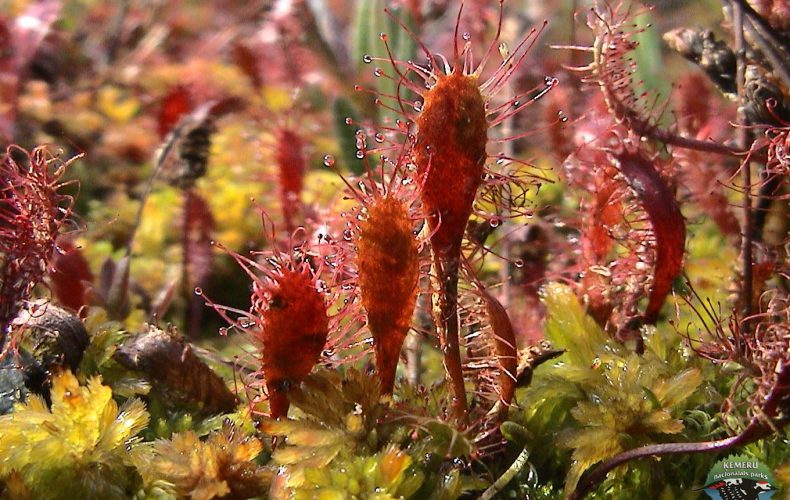
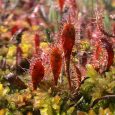
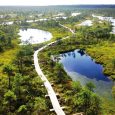
The Great Ķemeri Bog is one of the main bogs in the Ķemeri area, under which sulphurous waters form. The soil is nutrient-poor, acidic and in many places waterlogged. Most trees cannot survive in such harsh conditions, so only a few species of pine and birch can be found here, and they do not grow as big and as heavy as in the forest.
During migratory bird migration, the marsh is a great place for birdwatching. Sometimes you can see flocks of hundreds of birds – geese and cranes – and hear their calls.
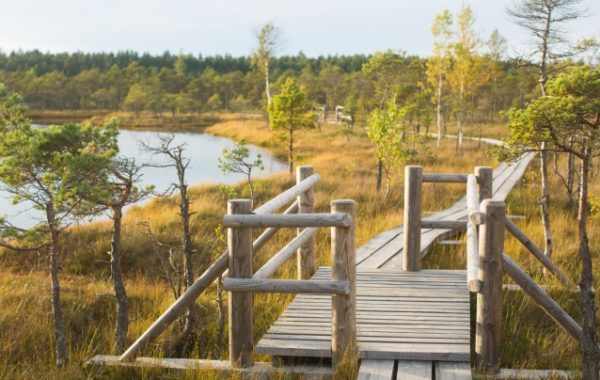
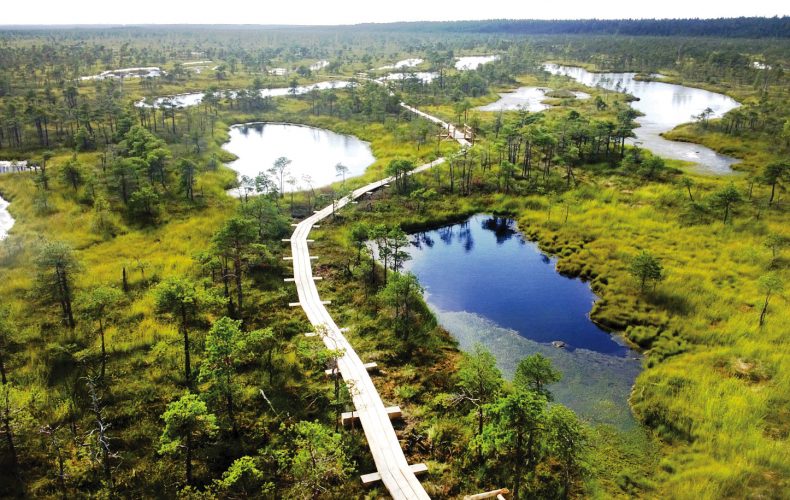
The Ķemeri Moor boardwalk makes it easy and safe to explore this otherwise inaccessible realm of mosses, bog pines, acacias, dark lakes and the scent of bullfinches.
The boardwalk is made of wooden planks and has two arches. The “small” one will take you to the first picturesque lakes, while the “big” one will allow you to see the landscape from above by climbing up the lookout tower.
Time required for the visit: 1.5h (big circle), 1h (small circle).
Guided tours are possible.
ACTIVITIES
Indoor and outdoor nature education and research activities about the natural values of the area.
The lessons are designed for pupilsfrom 1st to 12th grade
- .
- Forest ( 40 – 60 min.)
Natural forest in ĶNP. Exploring the forest through colours, sounds and smells. Exploring forest animals and plants. Searching for differences between living and fallen trees. What is a natural forest and how to recognise it. Human impact on forests and how important forests are in our lives.
What do plants need to feel good? On a walk around the Forest House we will learn how some plants have adapted to live in special conditions. We will measure the water level in the Vēršupīte river to understand how changes in water level affect plants. We will assess the effect of shade on plant development and learn to understand what plant competitors are. We will compare the growing conditions of plants in different places in Ķemeri Park.
- Water (40 – 120 min.)
Lake Slokas or Vēršupīte. Life in water is surprisingly interesting when explored with the right equipment. In this lesson we will learn how to use aquatic animal and plant detectors, and in the older classes how to determine the purity of the water.
- Seashore (40-90 min.)
What do we miss on the beach and in the dune forest? We will get to know the coast of the Gulf of Riga as a place where you can not only relax, but also do interesting research, gain knowledge about the natural diversity and geological processes that occur along the coast.
- The bog (90 – 120 min.)
High moss bog. The new footbridge in the Great Ķemeri Moor will once again give you the opportunity to visit the high moss bog, to get to know and study the plants and animals of the bog, to observe the special landscape of the bog and to learn a lot about the mysterious world of the bog.
The Nature Education Centre actively cooperates with schools in the region and offers various field
- trips
and lectures with attractive tasks and environmental games on nature conservation topics.
Photos from Jūrmala TIC and Ķemeri National Park archives.