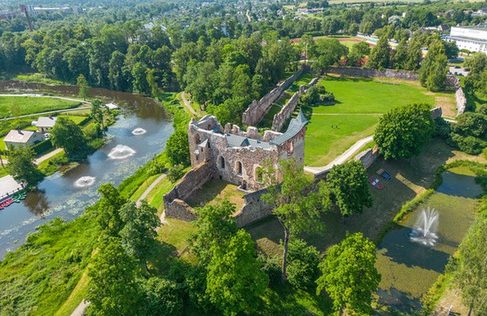
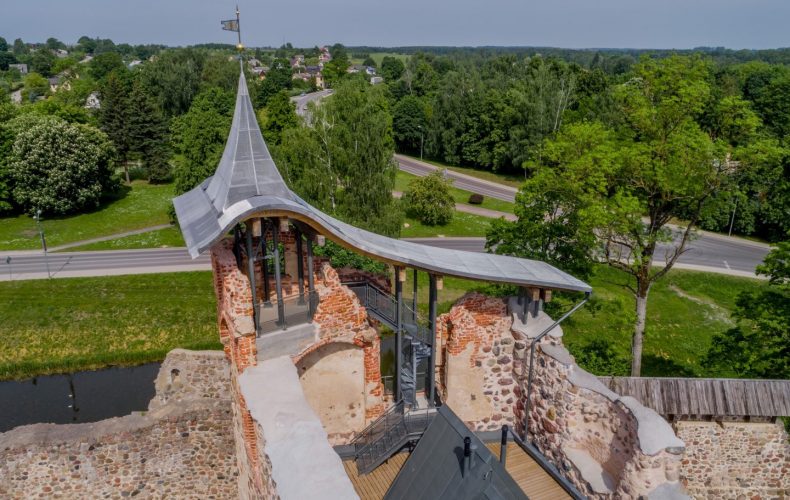
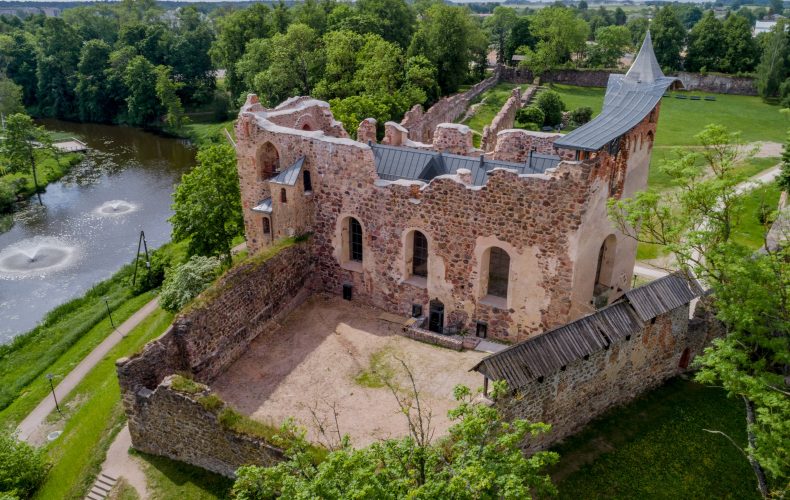
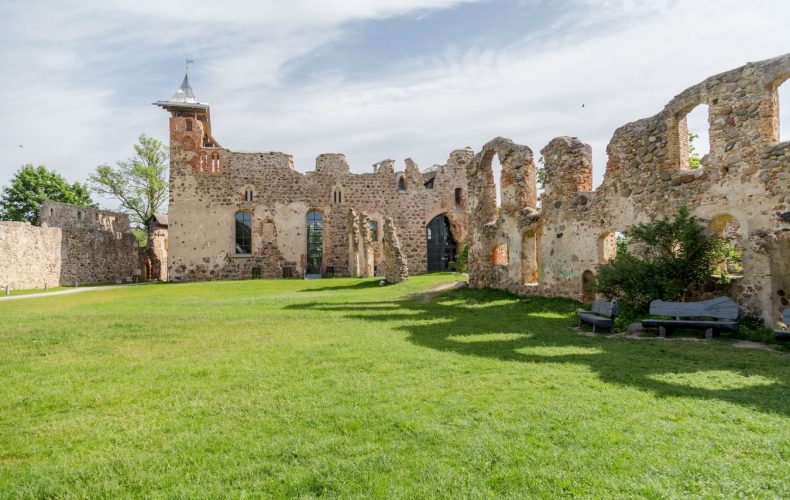
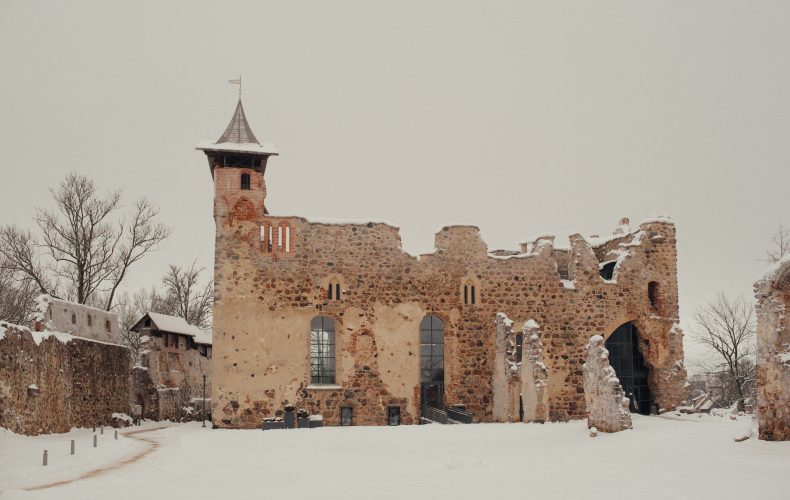
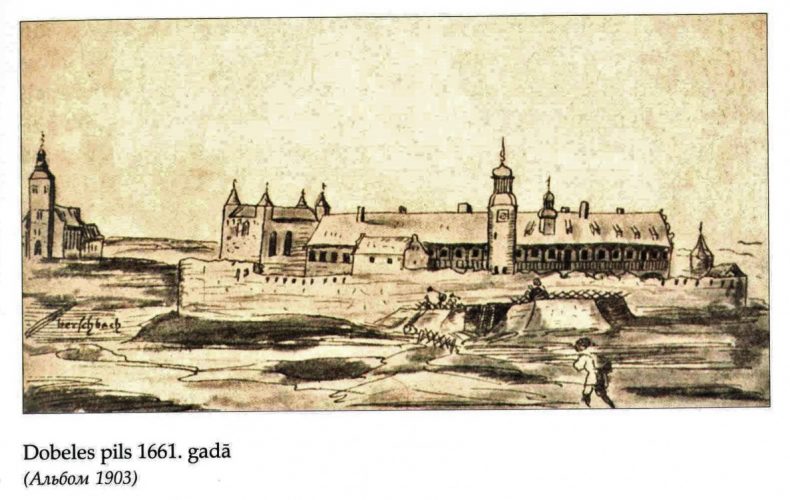
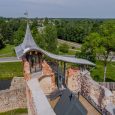

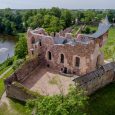
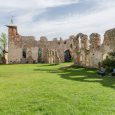
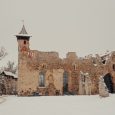
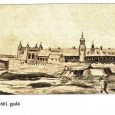
Historical evidence – Dobele castle mound with a forecourt, where the restored ruins of the Livonian Order stone castle and the restored chapel are now visible, was a stately Zemgale wooden castle with an ancient town before the German invasion. It stood there even before Dobele was first mentioned in the 1254 Book of the Dividing of Zemgale. Archaeological research shows that Dobele was inhabited already before our era. The castle was found on the banks of the river Bērze. The mound is 20-25 m high on the east and north sides of the river and relatively lower on the west side, with ditches for protection. In the 13th century, the hillfort was built on a hillfort. Fierce battles against the Crusaders took place in the Dobele area. For almost a hundred years, the Zemgale castle withstood countless attacks and sieges. In 1289, when further resistance became hopeless, the Semigallians burned Dobele Castle themselves and left for Lithuania. 1335. – 1347. g.
In 2002, with the support of Dobele City Council, the conservation of Dobele Castle
ruins
was launched. In 2018, three municipalities in Zemgale – Jelgava, Dobele and Bauska – started to implement a joint cultural heritage restoration project – “Preservation and Development of Significant Cultural Heritage for Improvement of Cultural Tourism Offer in Zemgale Region” – co-financed by the European Regional Development Fund (ERDF).
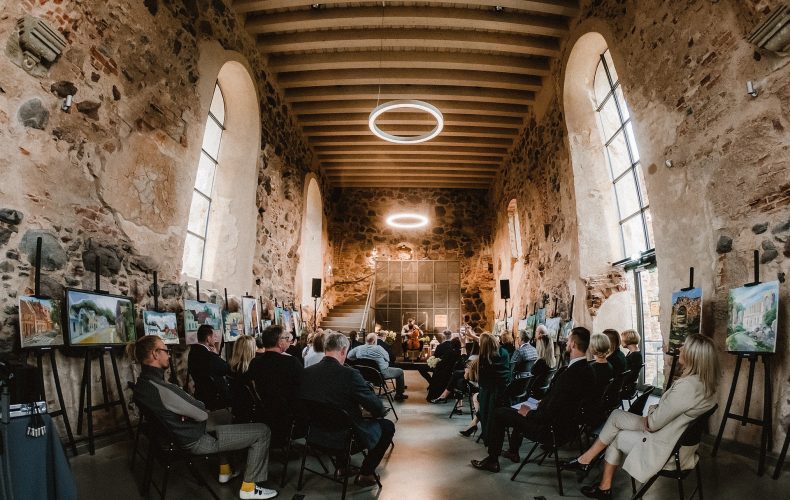
The rebuilt chapel building is due to be put into use in 2020 and has become a multifunctional, cultural, craft and tourism development centre called Dobele Castle.
OFFER
- Guided tour of the castle exhibition (LV, RU, ENG), group 15-25 persons, duration 40 min – 1 h;
- Guided tour of the castle exhibition and the castle courtyard (LV, RU, ENG, group 15-25 persons, duration up to 1,5 h);
- Cultural education programmes, creative workshops, master classes, thematic excursions (LV, RU, ENG for groups of 10 persons or more).
56.622746, 23.273024
Photo from Dobele TIC archive