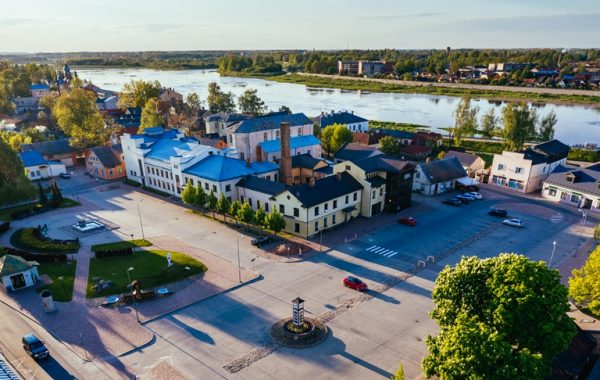


At the time of the town’s foundation in the 17th century, the site was owned by the state, i.e. by the Duke, and its use was linked to port activities. In the eighteenth century, the main public buildings were concentrated around the Old Town Square. The early 20th century was the time when the current Old Town Square emerged as a town square, which was used as a market square until the early 1960s, when part of the square was also used as a bus station and part as a car park.
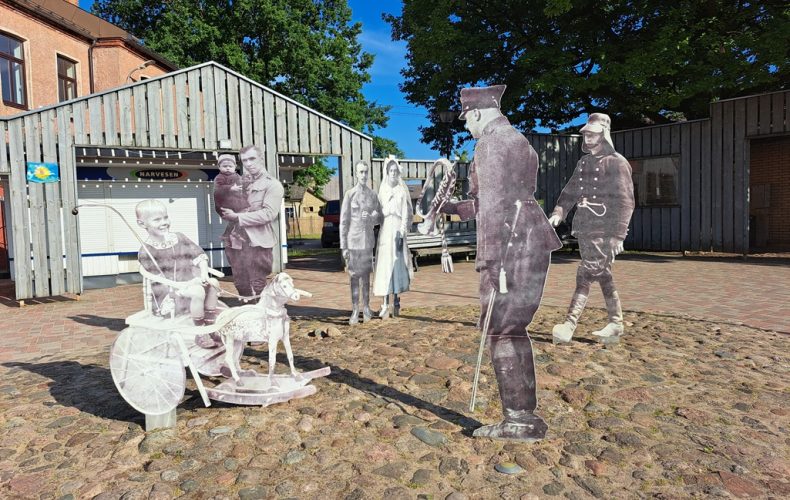
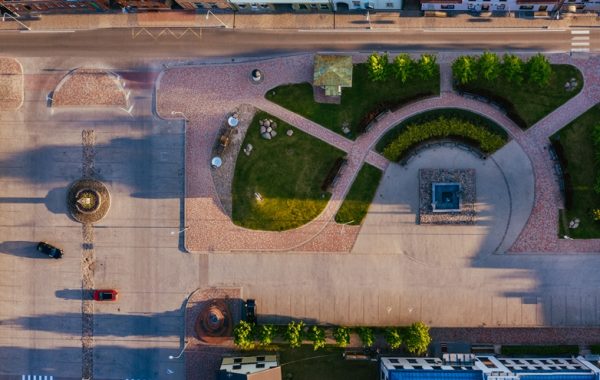
In 2010, the square was rebuilt. Visitors are greeted by the city’s symbol, the lynx, and can see objects such as the city clock, the money wallet, the well and the scales – a reminder of the former market square. The characters that emerge from the photographs tell the story of the city.
Photos from the Jēkabpils TIC archive.