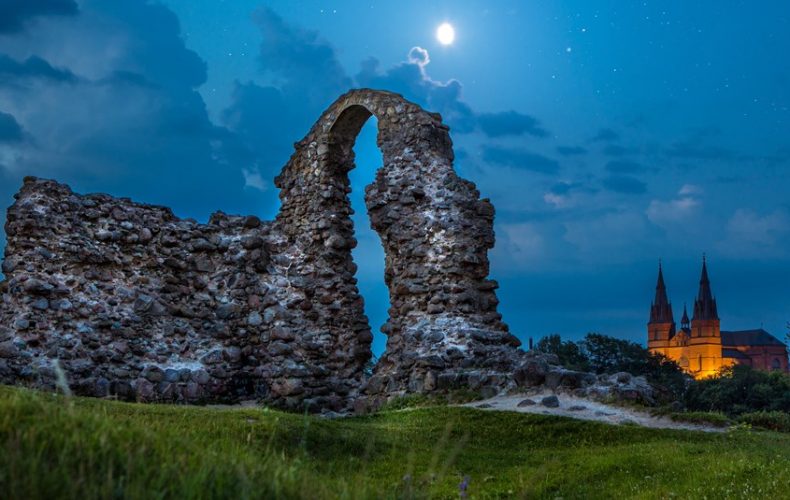

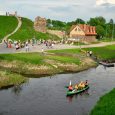
From the 9th to the 13th century, a fortified ancient Latgalian castle stood on a hill by the river. In 1285, Rozitten Castle was built by Wilhelm of Schurborg, the German Grand Master of the Livonian Order, as a residence for the Livonian Order’s fogt.
It was a two-storey stone castle with three wings and three-storey towers in the main part. To enter the castle, one had to cross a drawbridge, pass through three iron gates and enter the forburg (forecourt) along a path along the eastern wall.
As a strategic site, the castle was captured by the Russians, Lithuanians and Poles, but completely demolished by the Swedes in 1656-1660. After that it was not rebuilt as a fortress.
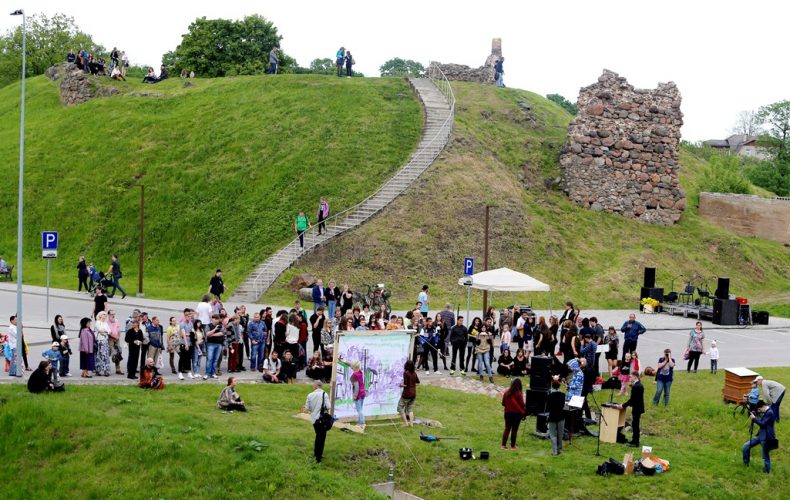
From 1712 onwards, the surrounding population was officially allowed to use the stones from the castle walls for the foundations of their houses and outbuildings. At the beginning of the last century, the castle grounds were still home to residential and outbuildings, and part of the castle surroundings were landscaped: a park was created, lighting was installed, a summer stage for the theatre was built.
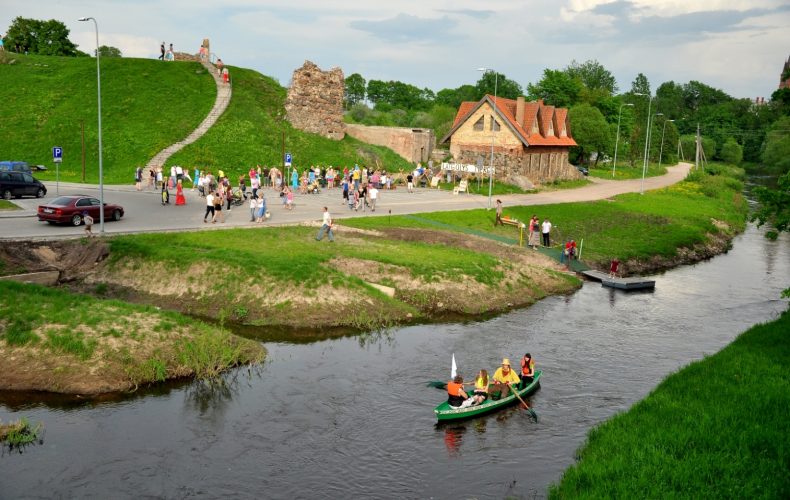
Today, the castle mound is one of the most prominent and most visited tourist sites in Rezekne.
In early 2003, a model of the Rezekne Castle was erected near the Rezekne Castle Mound, on the territory of the Rezekne Water Company. The model was designed by Edmunds Smans, a teacher at the Rezekne Technical School. The model was created with the support of the public organisation “Latvian History Park”. The model of the castle can be seen only during the tourist season – from April to October.
The square at the foot of the castle mound is named after Bishop Jāzeps Rancāns (1886-1969).
Photos from the archive of the Rezekne TIC.