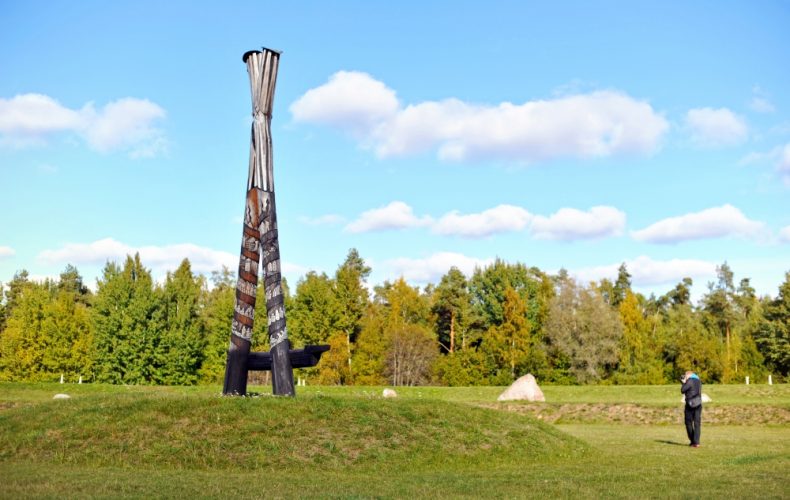
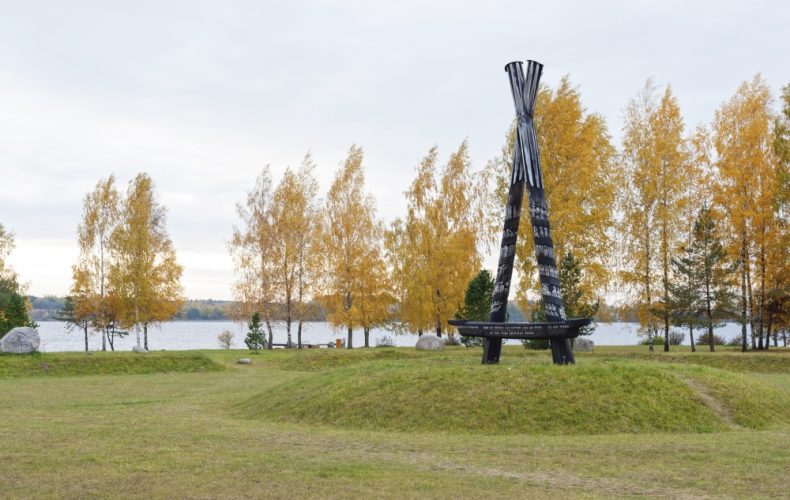
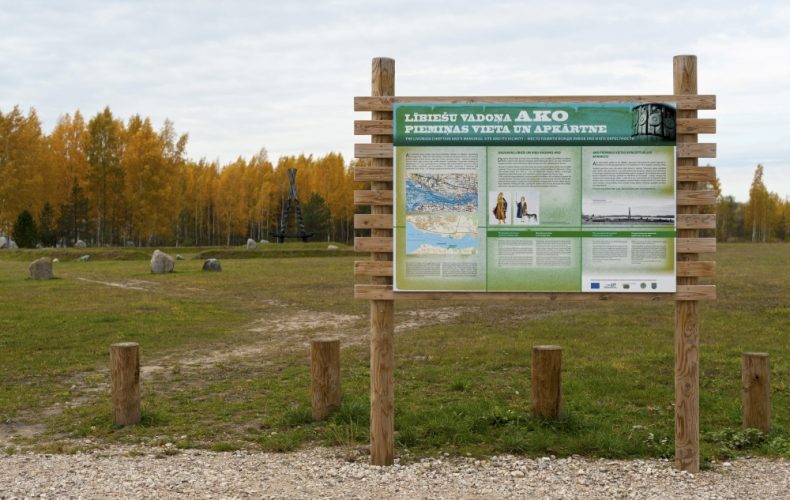

The memorial marker commemorates the freedom struggles of the indigenous Livs of the lower Daugava (10th-13th centuries) and the 1206 uprising against the Crusaders led by the Liv leader Ako of Martinsala. At that time, Martins Island was a significant Liv centre for the wider area, now the island is located below the level of the HPP reservoir.
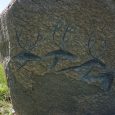
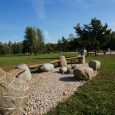
In 1994, a memorial was opened by sculptor Ģirts Burvjs – a tribute to the longing for freedom of the ancient inhabitants of our region. This place on the bank of the Daugava River gives a special feeling, as if the ancestral fighting spirit is just waiting behind the ancient ramparts, ready to break out at any moment. In the middle of the wall, the letter “A” has a special power. It is the first letter, recognised in Latvian scripts as the sign of God. The upward-pointing poles symbolise the struggle of opposing powers, which unite at the top, merging into the sign of the Sun, because that is the Latvian wisdom of life. A message about the events of those days is carved into the boat-shaped cross. The poles depict views of Riga, battle scenes, a castle mound and the ancient harbour, which was right across the Daugava. If you look at the memorial from a bird’s eye view, it resembles an ancient shield, protecting not only the fighter, but all of us. The symbolic rampart has four gates and on it, the ancient sentinels turned to stone. The Ako memorial was restored and updated with new ancient motifs in 2013. The area along the Daugava River was landscaped in 2014.
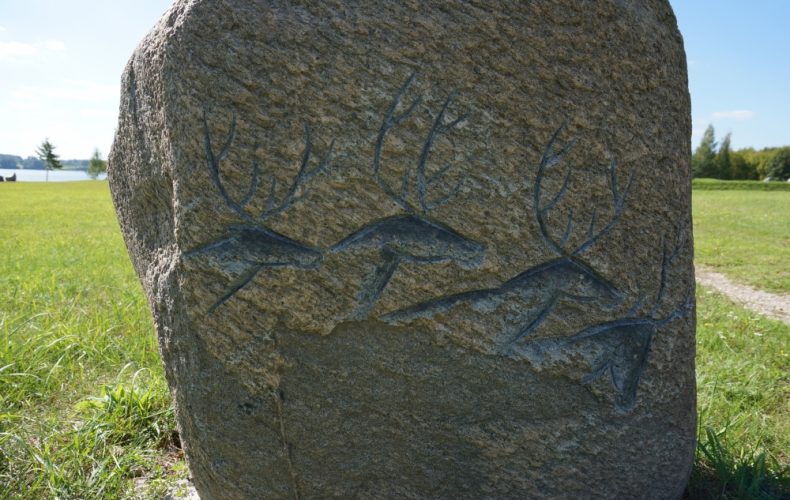
Near the memorial is the site where archaeologists discovered the oldest known Stone Age human settlement in Latvia, located in the area near Salaspils Laukskola. It was a seasonal settlement of Stone Age nomadic reindeer hunters. The reindeer herds followed the melting ice, and the hunters followed the reindeer. Several thousand flint tools have been found along a 500-metre stretch of coastline: daggers, cutters, arrowheads, knives and flint picks. The inhabitants are representatives of the Svidri and Arenburg archaeological cultures.
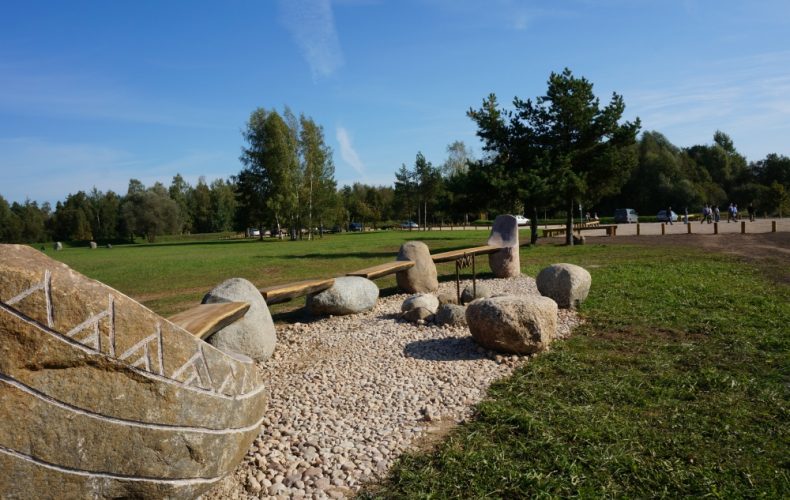
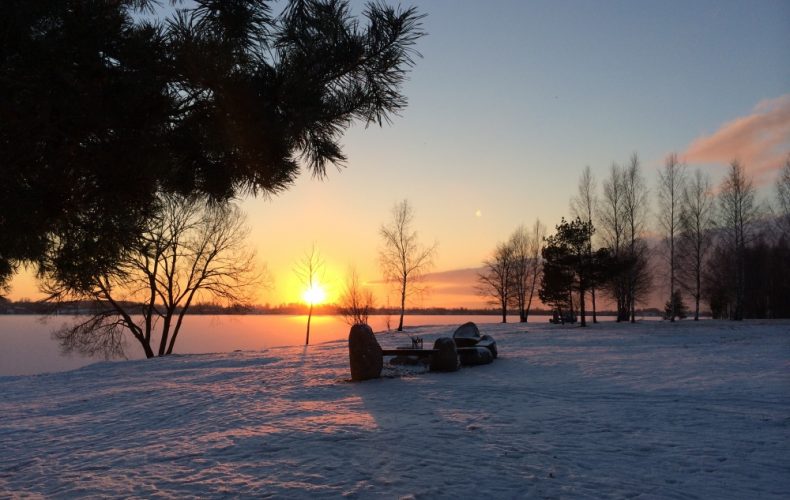
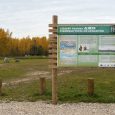
The area is landscaped, there is a boat launching point and picnic areas.
Photos from Salaspils TIC archive.