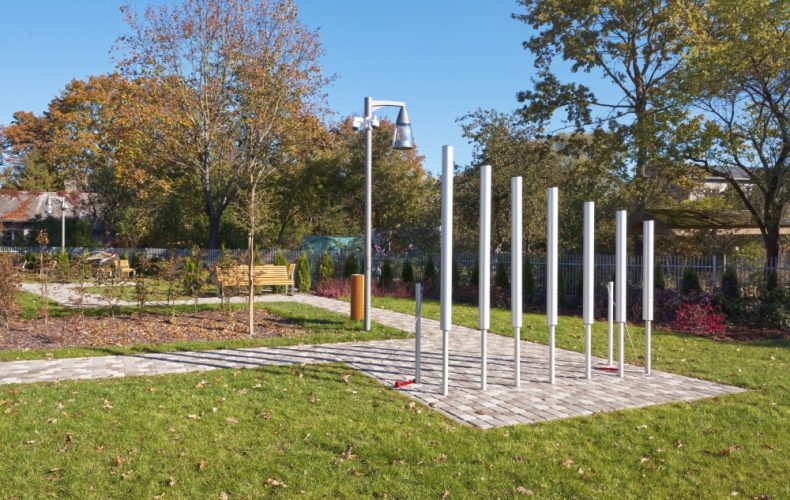

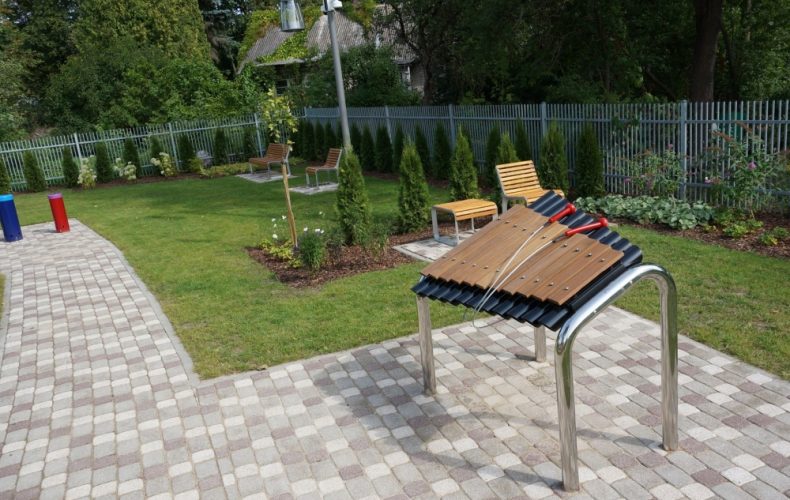
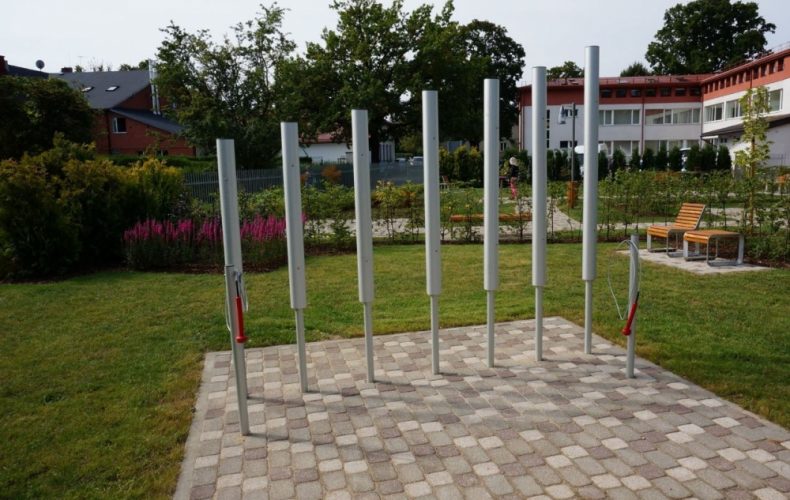
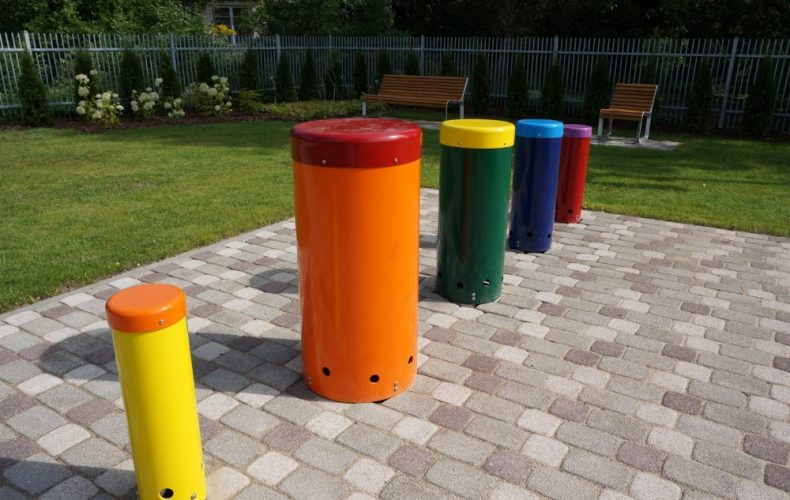
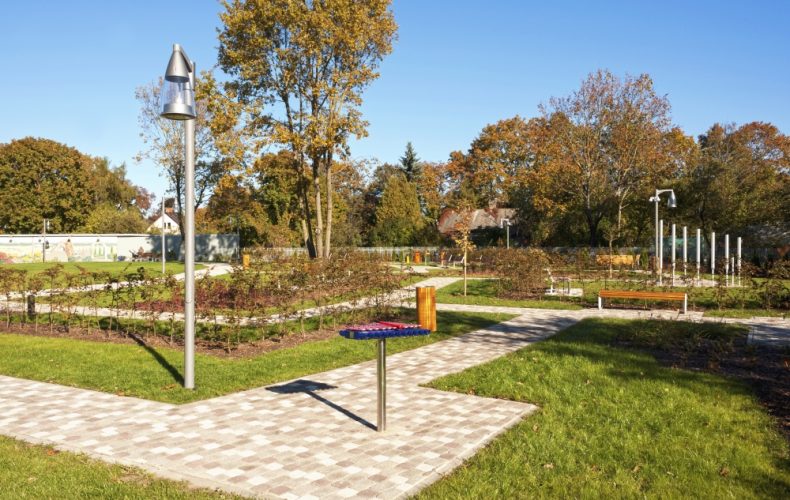
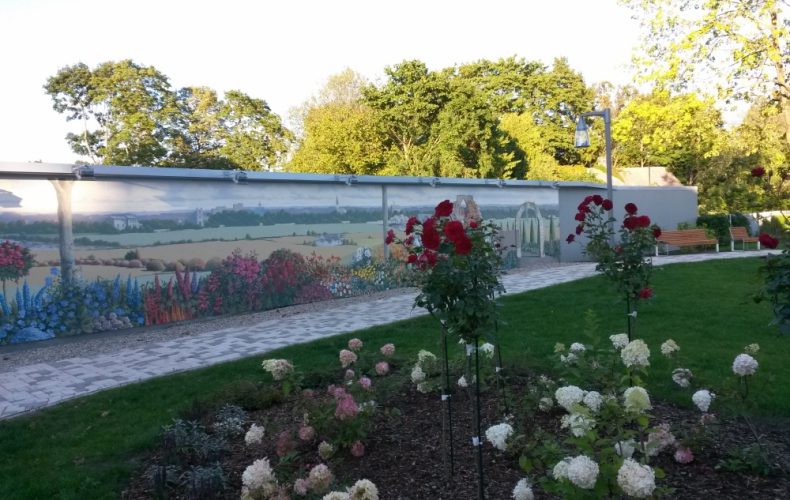
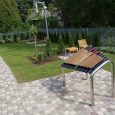
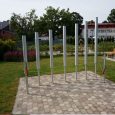
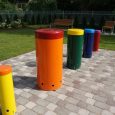
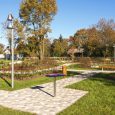
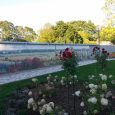
In a secluded area behind the Rīgava Culture House is a garden where art and music reign, and not only. The garden was created by landscape architect Daiga Veinberga. The Rīgava Music and Art Garden opened its gates to the public on 28 August 2015. It has always been the idea to bring life to the closed-off area behind the Rīgava cultural centre – to make it beautiful, tidy and accessible to local residents and visitors. As the park is surrounded by two artistic institutions – a cultural centre and a music and art school – the name came naturally. Alongside the manicured lawn and flowers, the park has children’s play equipment – outdoor musical instruments, beautiful benches, interesting lighting and, of course, a stage where various events take place: summer open-air cinema evenings, concerts and live opera broadcasts, theatre performances, art exhibitions, as well as markets. The thematically painted wall, which is the work of artists Aldis Reitis and Antra Ivdra, teachers at the art school, serves as a visual and sound barrier from the neighbouring properties.
“The area with the stage is intended for concerts, green balls, but we can use the meadow, which does not have benches, in different ways. When there are no events going on, people can come and sit on the grass, have a look around, read a book or have lunch. You can come here with your children and play musical instruments,” says D. Veinberga.
“The small gardens are designed like a labyrinth, so that everyone can find their own secluded corner where they can sit in peace and quiet, surrounded by beautiful plants. Plants that inspire us to creativity. A garden is such a living creature, a garden is not a building that can be finished. As the seasons change, so will the look of the garden – in spring we are delighted by tulips and crocuses, in autumn by the colour of the leaves, and in winter we can come in and build a snowman. This is a garden of creativity that will give us many new ideas about how we can all feel here.“
Photos from the Salaspils TIC archives.